I remember standing on a job in Surrey about ten years back, watching a lad try to talk a homeowner out of a proper soakaway because the “paperwork” didn’t look right. He was quoting regulations like they were gospel, but he couldn’t tell you a damn thing about what happens when the clay gets saturated. People think SuDS is just some expensive bureaucratic hoop you have to jump through to satisfy the council, but they’ve got it backwards. Understanding how SuDS requirements affect driveways isn’t about filling out forms; it’s about making sure you aren’t building a pond where your car is supposed to sit. If you ignore the way water moves through your sub-base, you aren’t building a driveway—you’re just building a future disaster.
I’m not here to give you a lecture on environmental policy or some glossy brochure version of civil engineering. I’m going to tell you how this actually works when the rain is lashing down and the ground is turning to soup. We’re going to look at the real mechanics of drainage, from the depth of your aggregate to the way you manage runoff, without any of the industry fluff. I’ll show you how to meet the rules without wasting a penny on unnecessary nonsense, ensuring your foundation stays as solid as the day it was poured.
Table of Contents
Planning Permission for Permeable Driveways the Paperwork Trap
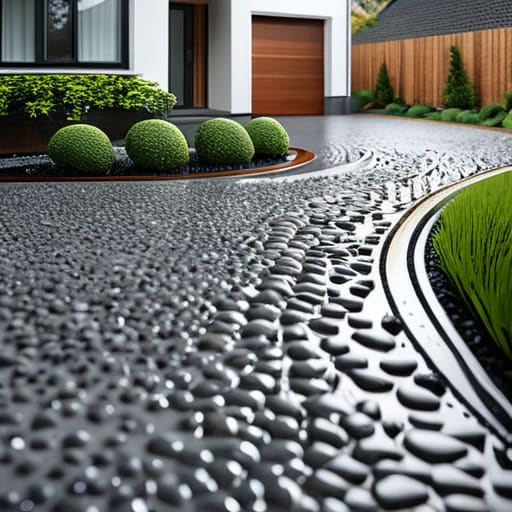
Now, don’t go thinking that because you’re using gravel or some fancy porous block, the council is just going to wave you through. I’ve seen plenty of lads get caught out because they thought “permeable” was a magic word that bypassed the rules. If you’re changing a hard surface to something soft, or if your driveway is sitting in front of a house, you need to look closely at planning permission for permeable driveways. The council doesn’t care how good your finish looks; they care about where that water goes once it hits the ground.
The real headache starts when you realize that simply choosing SUDS compliant driveway materials isn’t always enough to satisfy the local authority. If your site is tight or the slope is wrong, they might demand you install something more substantial, like attenuation tanks for residential use, to manage the flow. It’s a massive headache for a homeowner, but it’s better to deal with the paperwork now than to have a council inspector turning up six months later telling you your setup is illegal because you didn’t account for the runoff.
Surface Water Management Regulations Why Your Sub Base Is Now a Sponge
Now, here’s where the real trouble starts. Most people think they can just slap down some fancy blocks and call it a day, but the new surface water management regulations have changed the game. It’s no longer enough to just make the surface look pretty; the ground underneath has to do the heavy lifting. If you’re just pouring a solid slab and hoping for the best, you’re asking for a flood. These rules are designed for preventing driveway runoff from overwhelming the local sewers, which means your sub-base can’t just be a pile of whatever dirt was lying around.
If you aren’t using proper SUDS compliant driveway materials, you’re basically building a dam instead of a driveway. You need a layered system—usually a clean, crushed stone base—that acts like a reservoir. I’ve seen too many lads try to cut corners by using fines or sand in the sub-base to save a few quid, but all that does is clog the voids. Once those gaps are filled with silt, your “permeable” driveway becomes nothing more than a glorified, expensive puddle. You have to build the storage capacity into the ground itself before you even think about the top layer.
Five Things You’ll Get Wrong if You Ignore the SuDS Rules
- Stop thinking about the surface and start thinking about the void. SuDS means you aren’t just laying a slab; you’re building a reservoir. If you don’t account for the extra depth needed for a proper sub-base of clean, crushed stone to hold that water, you’re just building a very expensive, very heavy puddle.
- Watch your compaction like a hawk. When you’re building these permeable layers to meet regulations, you can’t just smash it down until it looks flat. If you over-compact the sub-base, you kill the very voids the water needs to move through, and suddenly your “permeable” driveway is acting like a solid sheet of glass.
- Don’t let the “water on site” habit ruin your mix. I’ve seen it a thousand times—a lad adds a bucket of water to a batch to make it flow easier for the finish. In a SuDS-compliant setup, you’re often dealing with specific permeable mixes; if you mess with the water-to-cement ratio, you’ll compromise the structural strength and the drainage capacity in one go.
- The joints are where the battle is won or lost. Whether you’re using block paving or specialized concrete, the gaps are your drainage channels. If you fill them with fine sand that washes away or silt that clogs them up, you’ve turned a SuDS-compliant driveway back into a standard, non-draining mess.
- Respect the fall, even if the water is going “down.” Just because the design is meant to soak into the ground doesn’t mean you can ignore the grade. You still need a controlled way to direct excess overflow away from the house foundations. If the ground is saturated and the SuDS system is full, that water needs a sensible path to go, or it’ll end up in your client’s cellar.
Don't Let the Regulations Bury Your Hard Work
At the end of the day, SuDS isn’t just some bureaucratic headache designed to slow you down; it’s a fundamental shift in how we have to treat the ground. You can spend a fortune on the most expensive paving slabs or the highest-grade concrete mix, but if you’ve ignored the drainage requirements or skimped on the depth of your sub-base to save a few quid, you’re just building a very expensive pond. You have to respect the water management as much as the surface itself. If you don’t get the permeability and the soakaways right from the start, you aren’t building a driveway—you’re just setting the stage for a structural disaster that’ll be sitting there, cracked and sinking, in five years’ time.
My advice is simple: stop looking at SuDS as a hurdle and start seeing it as the foundation of a proper job. The best contractors I ever worked with weren’t the ones who could pour the fastest, but the ones who understood that what stays hidden underneath is what actually holds the weight. Do the paperwork, get the sub-base right, and don’t let anyone talk you into a shortcut just because it’s easier. If you build it with the right drainage in mind, you won’t just be compliant with the law; you’ll be building something that actually lasts.
Frequently Asked Questions
If I use permeable paving, do I still need to worry about the thickness of my sub-base, or does the drainage take care of everything?
If you think the drainage does the heavy lifting for you, you’re asking for a cracked mess. Permeable paving isn’t magic; it just changes how the water moves. You still need a sub-base thick enough to carry the load of a car without shifting. In fact, you often need a deeper, more robust granular layer to act as your reservoir. If that base is thin or poorly compacted, the water won’t matter—the whole thing will sink.
How do I know if my existing ground is actually capable of soaking up water, or am I just building a very expensive, slow-draining bathtub?
You don’t guess with groundworks; you test. If you want to know if you’re building a driveway or a bathtub, you need a percolation test. Get a spade, dig a hole about 300mm deep, fill it with water, and see how long it takes to vanish. If it’s still sitting there like a puddle after an hour, your soil is clay-heavy and useless for SuDS. You’ll need a soakaway or a much beefier sub-base to compensate.
If I'm forced to install a soakaway to meet SuDS rules, where exactly does it go so it doesn't undermine the foundations of my house?
Listen, you don’t just dig a hole anywhere and hope for the best. If you put a soakaway too close to the house, you’re basically inviting the ground to move right under your footings. You need to keep it at least five metres away from any building. If the ground is heavy clay or you’re working in a tight spot, you’ll need a structural engineer to sign off on it. Don’t gamble with your foundations just to tick a SuDS box.