I remember standing on a site in ’94, watching a lad try to use a laser level to fix a drainage run that was already fundamentally flawed because he hadn’t even bothered to check the fall from the manhole. He was so obsessed with the fancy kit that he completely missed the fact that his gradients were a joke. People think setting out is all about high-tech gadgets and expensive surveying gear, but that’s a load of rubbish. The truth about how drainage runs are set out isn’t found in a manual; it’s found in the logic of the fall and the stability of the trench before you even think about laying a single length of pipe.
I’m not here to give you a lecture from a textbook or some polished, theoretical nonsense that falls apart the moment the rain starts hitting the excavation. I’m going to tell you how it’s actually done when you’re standing in a muddy trench with a tape measure and a bit of string. I’ll show you why the preliminary math and the ground conditions matter more than the pipes themselves, ensuring you don’t end up burying a headache that’ll surface the first time the system gets a heavy flow.
Table of Contents
The Drainage Level Survey Finding Truth in the Dirt
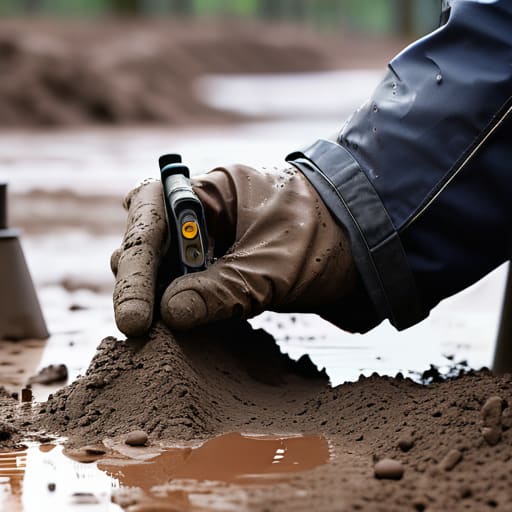
You can spend all day staring at a set of blueprints, but those lines on paper don’t know a thing about the actual muck you’re standing in. Before you even think about unrolling a length of pipe, you need a proper drainage level survey. I’ve seen too many young lads trust a printed plan blindly, only to find out the existing connection is three inches higher than the drawing suggested. If you don’t get your ground truths right first, you aren’t building a system; you’re building a blockage.
Once you’ve actually got the real numbers, you have to get serious about calculating pipe gradients. It’s not just about “making it slope down”; it’s about finding that sweet spot where the water has enough velocity to carry the solids without leaving them behind. I always tell my boys to use a laser level for drainage installation rather than messing about with a spirit level and a prayer. If your falls are too shallow, you’ll be digging it all up in two years when the silt settles. If they’re too steep, you’ve got the same problem. Accuracy at this stage is the only thing that keeps you from a very expensive mistake.
Calculating Pipe Gradients Before the First Trench Opens
Once you’ve got your survey data, you’re not just playing with numbers; you’re deciding whether that run will flow or sit there and rot. You can’t just eyeball a fall. I’ve seen too many lads try to “eye-ball” a gradient because they were behind schedule, only to find out three months later they’ve built a glorified stagnant pool. When you’re calculating pipe gradients, you need to be precise with your math before a single spade hits the earth. If your fall is too shallow, you get silt buildup; too steep, and you’re flushing the solids right out of the pipe, leaving the water to run away and leave the mess behind.
This is where most people get sloppy. You need to be calculating your drainage invert levels from the discharge point upwards, working backwards to ensure every inch of that run meets the sewerage pipe fall requirements. I always tell my lads: get your laser level out and check your math twice. If your levels are off by even a few millimetres over a long run, you aren’t just making a mistake—you’re burying a headache that the customer will be calling me about in two years’ time.
Five Ways to Avoid Digging the Same Trench Twice
- Check your datum point twice and your levels three times. I’ve seen lads rely on a single man with a laser who wasn’t paying attention, only to find out halfway through the run that they’ve built themselves into a corner with no way to discharge. If your starting point is a lie, every inch of pipe that follows is a waste of money.
- Don’t trust the “eye-ball” method for gradients. You might think a run looks right, but gravity doesn’t care about your opinion. If you’re running a 1 in 40 and you accidentally drift to a 1 in 80 because you were being lazy with the sight, you aren’t just installing a pipe; you’re installing a future blockage that someone’s going to call me to complain about.
- Plan for the bends before you break ground. A lot of youngsters think they can just shimmy a pipe around a gas main or a tree root once they hit it. That’s not how it works. You set your run based on where the pipe needs to go, not where it’s easiest to dig. If you haven’t accounted for the sweeps in your initial layout, you’ll end up with a run full of sharp angles that’ll catch every bit of debris that passes through.
- Respect the existing services, even if they look old. Just because a service isn’t on the site plan doesn’t mean it isn’t there. I’ve seen enough “surprises” in a trench to last a lifetime. When you’re setting out, give yourself a healthy margin of error. It’s better to shift your run by half a metre now than to spend three days waiting for a utility company to come out and tell you you’ve hit their cable.
- Verify your invert levels against the actual discharge point, not just the next pipe. It’s easy to get caught up in the math of the run itself and forget that the whole system is useless if it doesn’t meet the soakaway or the manhole at the right height. If your math says you’re fine but the discharge point is higher than your last pipe, you’ve just spent a week digging a very expensive, very useless hole.
Don't Bury Your Mistakes
At the end of the day, setting out drainage isn’t about following a pretty line on a drawing; it’s about respecting the physics of the ground. You’ve done the survey, you’ve double-checked your levels, and you’ve calculated your gradients so you aren’t left with a standing pool of filth in three years’ time. If you rush the math or ignore a slight deviation in the sub-grade, you aren’t saving time—you’re just scheduling a future disaster. Remember, once that trench is filled and the backfill is compacted, the truth is buried, and finding a mistake then is ten times more expensive than finding it while the pipes are still sitting in the open air.
I’ve seen plenty of lads try to “eye it” because the weather was turning or the client was breathing down their neck, but the ground doesn’t care about your schedule. It only cares about gravity. Take the extra hour to check your falls one last time before the first pipe hits the bedding. There is a particular kind of peace that comes with knowing your run is dead-on and your levels are solid. Do it right the first time, measure twice, and you’ll sleep a lot better knowing that when the rain comes, your work will do exactly what it was built to do: stay out of the way.
Frequently Asked Questions
What do I do if I hit an unexpected utility line or a rock shelf halfway through my set-out?
Stop. Right there. If you hit something unexpected, the worst thing you can do is try to “work around it” on the fly. You hit a utility? Stop digging, call the client, and check the service drawings again. You hit a rock shelf? Don’t just sledgehammer through it and hope for the best. If that shelf changes your invert levels, your whole gradient is shot. Re-calculate, re-survey, and fix the math before you bury the mistake.
How do I check that my gradients are actually holding true once I've got the pipes in the trench and the bedding laid?
Don’t just eyeball it and hope for the best. Once that pipe is sitting in its bedding, you grab a laser level or a long, straight spirit level and check it again. I always run a string line from the manhole to the next inspection chamber, but that’s just for the general run. You need to check the actual pipe at every single joint. If it’s sagging or climbing even a tiny bit, you’ve lost your gradient, and you’ll be digging it all back up later.
If I’m working on a slope, how do I manage the transition between different run lengths without losing my falls?
Listen, slopes are where most lads lose their heads and their falls. You can’t just eyeball a transition. If you’ve got a long run hitting a change in grade, you don’t just “adjust” on the fly. You need a fixed benchmark—a permanent datum point—that doesn’t move. Break the run into manageable sections with manholes or inspection chambers at the transition points. It gives you a way to reset your levels and ensures that one bad stretch doesn’t turn your whole system into a stagnant pond.