I remember standing on a site in Surrey back in ’94, watching a lad pour a pristine, high-spec slab that looked like a mirror finish. Two years later, I was called back to see that same slab looking like a jigsaw puzzle because the owner thought he could just “out-engineer” the ground. People love to spend a fortune on fancy additives or thicker reinforcement, thinking that’s the secret, but they completely ignore how clay heave and shrinkage work in the first place. You can buy the most expensive mix in the country, but if you haven’t respected the soil, that ground is going to move, and it won’t care how much money you wasted on the concrete.
I’m not here to give you a lecture from a textbook or some glossy brochure filled with academic jargon. I’m going to tell you what I learned from forty-three years of seeing good pours go wrong because the sub-base was ignored. We’re going to strip away the nonsense and look at the actual mechanics of why that soil expands when it’s wet and pulls away when it’s dry. I’ll show you exactly what you need to do to get the ground right before the first truck ever arrives on site.
Table of Contents
Expansive Clay Properties the Silent Engine of Foundation Movement Causes
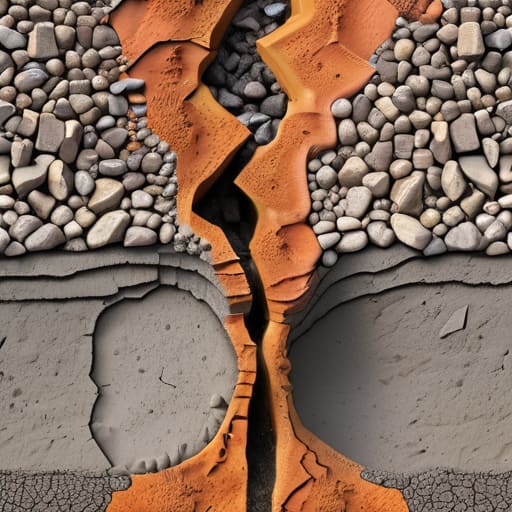
Now, you can look at a patch of ground and think it’s solid, but clay has a memory and a temper. The real trouble lies in those expansive clay properties that act like a slow-motion hydraulic jack under your feet. It isn’t just dirt; it’s a collection of microscopic plates that act like little sponges. When it gets wet, those plates push apart to make room for the water, and that’s when you see the subsidence and swelling that tears a new extension right off its footings.
The real killer is the inconsistency. It’s the soil moisture content impact that catches people out. One month the ground is bone dry and shrinking away, leaving air gaps under your slab; the next, a heavy rainy season turns that same soil into a swelling mass that exerts more pressure than a car jack. You’ll also see it go haywire near trees, where the root system water extraction sucks the moisture out of the clay so fast the ground drops out from under you. It’s a constant, invisible tug-of-war happening beneath your boots.
Soil Volume Changes Why Your Sub Base Is a Moving Target
Look, I’ve seen it a hundred times: a lad gets a perfectly level sub-base ready, calls in the mix, and thinks he’s home and dry. But he’s forgotten that he’s building on a living, breathing thing. When we talk about soil volume changes, we aren’t talking about a static platform; we’re talking about a surface that moves more than a bloody trampoline if you don’t respect it. When that clay gets a drink, it doesn’t just sit there—it expands with enough force to lift a slab right off its bedding.
Then, the dry spell hits. The moisture evaporates, and suddenly that same ground is pulling away from your concrete, leaving gaps and creating cracks. This cycle of subsidence and swelling is what kills a job. You’ll also see it go haywire near any large trees; the root system water extraction can suck the moisture out of the clay so fast it shrinks under your feet before the concrete has even set. If you aren’t accounting for that movement in your design, you’re just pouring money into a hole that’s going to shift.
Five Ways to Stop the Ground from Moving the Goalposts
- Stop treating the sub-base like a suggestion. If you’ve got heavy clay, you don’t just slap a layer of MOT Type 1 on top and hope for the best; you need to ensure that sub-base is thick enough and compacted well enough to act as a proper buffer between your slab and the soil’s mood swings.
- Watch the water, not just the mix. Clay is a sponge, and if you let water pool near your foundations or if you have a leaking drain nearby, that clay is going to swell and heave like it’s trying to lift your house off the map. Control the drainage before you even think about the pour.
- Don’t let the sun rob you of your moisture. When you’ve got a slab down in dry weather, the clay underneath can shrink and pull away, leaving a gap that’ll lead to cracks. You’ve got to manage the moisture levels in the ground and the concrete consistently so the whole system doesn’t go through a massive volume change overnight.
- Beware the “easy” water trick. I’ve seen it a thousand times—a lad adds a bucket of water to the truck because the mix looks a bit stiff, thinking he’s doing everyone a favour. All he’s doing is making the concrete more brittle and less able to handle the stresses when that clay underneath starts its inevitable dance.
- Respect the depth of the frost line and the seasonal shift. You can’t just pour shallow and ignore the fact that the ground’s movement changes with the seasons. If your foundations aren’t deep enough to sit below that active “moving zone” of the clay, you’re just building a very expensive way to watch a slab crack.
Don't Fight the Ground, Respect It
At the end of the day, you have to stop thinking about your slab as a standalone object and start seeing it as part of a system. If you ignore the way that clay swells when it gets wet or shrinks when the sun bakes it dry, you aren’t building a foundation—you’re just setting a timer on a failure. We’ve talked about the volume changes and the way that sub-base becomes a moving target, but the lesson is simple: you can’t outrun the soil. Whether it’s through proper drainage, getting your compaction right, or choosing the correct depth for your footings, your only real job is to manage the moisture before that first truck ever rolls onto the site. If you try to skip the prep work to save a few quid, the ground will eventually collect its debt.
I’ve seen plenty of lads try to “fix” a cracked slab by slapping some resin over the top or adding more weight, but that’s just putting a plaster on a broken leg. Real groundwork isn’t about how pretty the finish looks on day one; it’s about how that slab behaves five years down the line when the seasons change. If you take the time to respect the science of the soil and do the hard, unglamorous work of stabilizing your sub-base, you can sleep soundly knowing your work will actually last. Build it right the first time, respect the sub-base, and you won’t be the one getting the phone call in a decade explaining why the floor is sloping.
Frequently Asked Questions
If I've already seen cracks in an existing slab, is there any point in trying to fix the ground underneath, or is the damage already done?
Look, if you’re seeing cracks, the battle is already lost for that specific slab. You can’t un-crack concrete. Trying to fix the ground underneath an existing, broken slab is like trying to fix a broken leg by changing your shoes. You might stabilize the soil, but that concrete is already compromised. My advice? Stop patching the cracks. Fix the sub-base properly, get your compaction right, and pour a new slab. Do it once, do it right.
How much water am I actually allowed to let soak into the sub-base before the clay starts acting up?
You’re asking the wrong question. It’s not about a specific amount of water; it’s about the threshold where that clay stops being a solid base and starts acting like a sponge. Once that moisture gets deep enough to change the soil’s structure, you’ve already lost. If you see puddling or the ground feels “spongy” under your boots, you don’t pour. You wait, you drain, or you dig it out. You don’t gamble on a wet sub-base.
Can I just use a thicker slab or more reinforcement to fight the movement, or is that just throwing good money after bad?
Listen, I’ve seen it a dozen times. Some lad thinks he can just throw a bit of extra mesh in or double the slab thickness to “brute force” the ground into behaving. It’s a waste of money. You aren’t building a bunker; you’re building on a sponge. If that clay decides to heave, it’s got more strength than your steel ever will. You can reinforce the slab all you like, but you’re just making a more expensive crack.