I remember standing on a site in ’94, watching a lad pour a massive slab on a Tuesday afternoon, only to see him grab a hose and start spraying the surface with water because the sun was “too hot.” He thought he was helping it set; I knew he was just washing away the very thing that makes the whole job work. Most people think strength is something you just buy by hand-picking a fancy high-spec mix from a catalogue, but they’ve got it all wrong. If you want to understand how concrete actually gains strength, you have to stop looking at the delivery ticket and start looking at the chemistry of the cure. It isn’t magic, and it isn’t just about how much cement you throw in the hopper.
I’m not here to give you a lecture from a textbook or some overpriced consultant’s slideshow. I’m going to tell you what forty-three years of pouring in the rain, the heat, and the wind has taught me about the real science of the hydration process. We’re going to strip away the nonsense and look at why your slab either becomes a rock or turns into a pile of gravel, focusing on the stuff that actually matters: temperature, moisture, and patience.
Table of Contents
The Chemical Reaction of Cement and Water You Cant See

Look, most people think concrete “dries” like a puddle of rainwater on a driveway. It doesn’t. If you’re waiting for the water to evaporate to get a hard surface, you’ve already lost the battle. What’s actually happening is the chemical reaction of cement and water, a process called hydration. It’s a microscopic construction project happening inside the mix. As the water hits the cement, it triggers the calcium silicate hydrate formation, which is essentially a web of tiny crystals growing and interlocking like fingers. These crystals are what actually give the slab its backbone.
Now, here’s where the rookies mess up: they think because the surface feels hard, the job is done. They forget that this reaction is an exothermic reaction in concrete curing, meaning it generates its own heat. If you let that heat escape too fast or, heaven forbid, you let the surface moisture evaporate before those crystals have finished knitting together, you’re going to end up with a weak, dusty mess. You aren’t just managing a liquid; you’re managing a living chemical process that needs its moisture to stay put.
Calcium Silicate Hydrate Formation Building the Invisible Skeleton
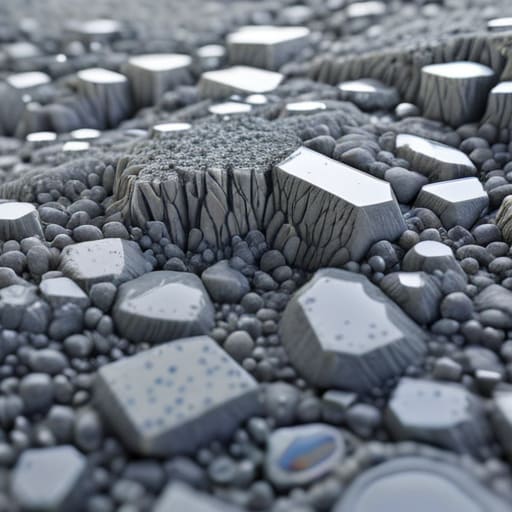
Now, if you want to understand why a slab holds up a heavy-duty truck versus why it crumbles like a biscuit, you have to look at the microscopic level. We aren’t just talking about a paste getting hard; we are talking about calcium silicate hydrate formation. As that chemical reaction of cement and water kicks off, it starts growing these tiny, needle-like crystals. Think of them like a microscopic web or an invisible skeleton weaving itself through the aggregate. If those crystals don’t interlock properly because you rushed the job or messed with the water ratio, you’ve essentially built a house of cards.
This isn’t just some lab theory, either; it’s the entire basis of concrete compressive strength development. Those crystals need time and, more importantly, they need the right environment to knit together. This is where most lads on site get it wrong. They think once the surface looks set, the job is done. But if you don’t manage the importance of moisture retention in concrete, those crystals stop growing prematurely. You end up with a surface that looks fine but has no real structural backbone underneath.
Five Ways You’re Killing Your Strength Before It Even Sets
- Stop treating water like it’s free. I’ve seen too many lads add a hoseful to the truck because the mix felt “stiff,” but all they’re doing is pushing the cement particles too far apart. You might get a smoother finish for ten minutes, but you’re diluting the chemical reaction and leaving the slab weak and porous. If it’s too dry, talk to the plant; don’t fix it with a garden hose.
- Watch the temperature, not just the clock. That invisible skeleton I mentioned needs warmth to grow, but if the sun is beating down on a fresh pour and you haven’t got any curing compound or polythene ready, the water evaporates before the chemistry can finish its job. You’ll end up with a surface that looks fine but has no real strength underneath because the reaction was cut short.
- Don’t forget that the sub-base is your foundation for strength. You can have the most expensive, high-spec mix in the world, but if you’re pouring onto soft, uncompacted ground that shifts or settles, that slab is going to crack. A crack isn’t just a visual nuisance; it’s a break in the structural continuity that the hydration process was trying to build.
- Curing isn’t an optional extra; it’s the job. You don’t just pour and walk away to the pub. You need to keep that moisture in there—whether that’s through spraying, covering, or using a chemical membrane—so the cement has the fuel it needs to keep building those crystals. If you let it dry out too fast, you’re essentially starving the concrete of its own strength.
- Respect the timing of your joints. If you wait too long to cut your control joints, the concrete will decide where it wants to crack on its own, and it won’t be where you wanted it. Once that internal tension builds up from the shrinking process, you’re fighting a losing battle. You have to give the slab a way to move without breaking its back.
The Bottom Line on Strength
At the end of the day, you have to stop thinking of concrete as a liquid that just “dries out.” It doesn’t dry; it transforms. We’ve looked at how that microscopic dance between water and cement builds the calcium silicate hydrate crystals—the actual skeleton that gives a slab its backbone. If you understand that strength is a chemical race, you’ll stop making the rookie mistake of adding extra water to the drum just to make it easier to spread. You aren’t just making it easier for your crew; you are diluting the very reaction that keeps the structure from crumbling in five years’ time. If you mess with the water-to-cement ratio, you aren’t just making a mess; you’re sabotaging the chemistry before the first trowel even hits the surface.
My advice is simple: respect the process and don’t try to outsmart the science. You can buy the most expensive, high-spec mix in the country, but if you neglect the curing or let the sun bake the moisture out too fast, you’ve wasted your money. Real strength is built in the quiet hours after the pour, where the temperature and moisture levels do the heavy lifting. Do the prep right, manage your curing like your reputation depends on it, and the concrete will do the rest. Build it to last, not just to look good for the handover.
Frequently Asked Questions
If the chemical reaction is what builds the strength, why does adding extra water to the truck make the concrete easier to spread but leave the slab weaker in the end?
Look, I’ve seen it a thousand times. Some lad on site wants the mix to flow like soup so he can finish the job faster, so he grabs the hose and adds water. It feels easier in the moment, sure. But all you’re doing is creating tiny gaps in the structure. When that extra water evaporates, it leaves behind microscopic voids. You aren’t making it better; you’re just building a sponge instead of a slab.
How much does the temperature of the ground and the air actually change the speed of that "invisible skeleton" forming?
Look, temperature is the throttle on that chemical reaction. If the ground is frozen or the air is biting, that skeleton grows at a snail’s pace; you’re basically waiting for a miracle. But if you’re pouring in a heatwave? That reaction goes into overdrive. It sets so fast you can’t finish it properly, and you end up with a brittle, thirsty mess. You aren’t just pouring concrete; you’re managing a biological clock.
Once the concrete looks hard to the touch, is it actually ready to take a load, or am I just asking for a crack by moving too fast?
If it’s hard to the touch, you’ve barely scratched the surface. That’s just the skin. The real strength—the stuff that actually holds weight—is still building deep inside that skeleton we talked about. If you start driving a van over it or stacking heavy blocks just because it feels solid, you’re asking for a crack. You might be able to walk on it, but don’t even think about a load until it’s cured properly.