I remember standing on a site in ’94, watching a lad try to save a few quid by ordering a mix with nothing but crushed recycled brick for the coarse aggregate. He thought he was being clever, being “efficient,” but I could see the disaster coming before the first shovel hit the ground. People spend all their time obsessing over the cement content or the fancy additives in the brochure, but they completely ignore the bones of the thing. If you don’t understand how aggregates affect concrete, you aren’t building a foundation; you’re just building a future headache. You can have the most expensive cement in the world, but if your stone is dirty, porous, or the wrong shape, that mix is going to fail you every single time.
I’m not here to give you a lecture from a textbook or some glossy sales pitch from a supplier. I’m going to tell you what actually happens when that truck pulls up and the mix starts to set. I’ll show you why the size, shape, and cleanliness of your stone matters more than the paperwork, and how to spot the kind of rubbish that will crack your slab before it’s even cured.
Table of Contents
The Hidden War Fine vs Coarse Aggregates and the Mix Balance
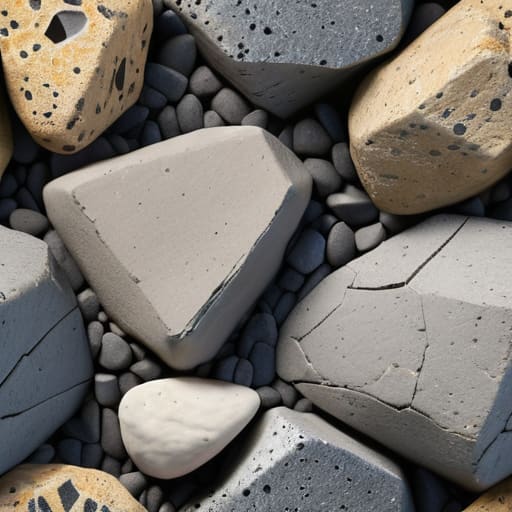
You’ve got two players in this game: the big lads, the coarse aggregates, and the small ones, the fines. Think of the coarse stuff as the bones of the whole operation. It’s what gives the slab its backbone and its concrete compressive strength. But if you’ve got nothing but big stones and no sand to fill the gaps, you’re going to have a nightmare of a time. You’ll end up with massive voids that make the mix look like a pile of gravel rather than a cohesive paste. On the flip side, if you lean too hard on the fines, you’re just wasting cement to coat every single tiny grain, and you’ll end up with a mix that shrinks like a dried raisin once it sets.
It’s all about the aggregate particle size distribution. You want a mix where the small stuff tucks neatly into the spaces between the big stuff. If your aggregate shape and workability are off—say you’re using crushed stone that’s too angular—the mix will fight you every step of the way. It’ll be stiff, it’ll drag, and your lads will be tempted to throw water in just to get it to move. That’s exactly how you lose the battle before you’ve even finished screeding.
The Interfacial Transition Zone in Concrete Where Strength Goes to Die
Now, if you want to know why a slab looks solid but snaps like a biscuit under a bit of pressure, you need to stop looking at the stones and start looking at the gaps between them. I’m talking about the interfacial transition zone in concrete. Think of it as the microscopic “no man’s land” where the cement paste meets the surface of your aggregate. It’s the weakest link in the whole chain. If that bond isn’t tight, you aren’t pouring a solid mass; you’re just gluing rocks together with a very expensive, very brittle glue.
The trouble usually starts with how much water is hanging around those particles. If your aggregate is too porous, or if you’ve got a poor aggregate particle size distribution, that excess water migrates toward the stones during the set. It leaves behind a tiny, watery film that creates a microscopic void. You can have the highest theoretical concrete compressive strength on your spec sheet, but if those transition zones are full of tiny pockets of weakness, the whole thing is a house of cards. The strength isn’t in the stone, and it isn’t in the paste—it’s in how well they shake hands.
Five Ways Your Aggregates Will Screw You If You Aren't Looking
- Watch the cleanliness of your stone like a hawk. If your aggregates are covered in silt, clay, or even just fine dust, they won’t bond to the cement; they’ll just sit there like pebbles in a pile of sand, waiting for the first frost to pop them right out of the slab.
- Don’t go chasing the cheapest grit just to save a few quid on the mix. If your aggregate shape is too rounded—like river gravel—you’re losing your mechanical interlock, and you’ll find yourself fighting a mushy, unstable mess that won’t hold its shape when you’re trying to screed it.
- Grading isn’t just a word for a certificate; it’s the difference between a solid mass and a porous sponge. You need a proper distribution of sizes so the small bits fill the gaps between the big ones; if you’ve got too much of one size and not enough of the other, you’ll end up needing way too much cement to fill the voids, and you’re just throwing money down the drain.
- Mind the absorption rates of your stone. Some of these lighter, porous aggregates soak up water from the mix like a thirsty sponge, which messes with your water-cement ratio and leaves you with a mix that’s gone stiff before you’ve even finished spreading it.
- Never, and I mean never, let a supplier swap your spec for something “similar” without checking it first. A change in the mineralogy or the hardness of the aggregate might not look like much on a delivery note, but it’ll change the way the whole batch sets and how it handles the load once it’s cured.
Don't Let Your Mix Become a Memory
At the end of the day, it all comes back to what you’re putting in that drum. You can specify the most expensive cement from a premium supplier, but if you’ve ignored the grading of your coarse aggregate or let your fines get contaminated with silt, you’re just throwing money into a hole. We’ve talked about the balance between the fines and the stone, and why that tiny, invisible gap—the transition zone—is where most jobs go to die. If your aggregates aren’t clean, well-graded, and sized right for the job, you aren’t building a foundation; you’re just building a future headache that’ll be waiting for you in the form of a crack in six months. The aggregates are the skeleton of your pour, and a weak skeleton means a collapsed body every single time.
I’ve spent forty-three years watching men try to cut corners by using whatever rubbish was lying around the yard, thinking the cement would just “fix it.” It never does. If you want to do this right, you respect the materials before they even hit the sub-base. Stop looking at the pour as just a way to fill a space and start looking at it as a science of layers and interlocking strength. Do the work on the selection and the prep, and you’ll sleep soundly when the weather turns. Get the mix right, respect the stone, and the concrete will take care of itself.
Frequently Asked Questions
If I'm seeing too many voids in my finished slab, is that a problem with the aggregate size or did the lads just add too much water to the mix?
It’s usually a bit of both, but I’d bet my last pint it’s the way it was handled on-site. If your aggregate is too large for the depth of the pour, it won’t pack right. But if you’re seeing honeycombing and voids, someone likely added too much water to make it “slump” easier, which kills the cohesion. You end up with a soup that lets the stones settle and leave air pockets behind. It’s lazy work.
Can I get away with using recycled crushed concrete as my aggregate if I'm just doing a garden path, or am I asking for a mess?
Look, if it’s just a garden path for a bit of walking, you won’t sink the house, but don’t expect a mirror finish. Recycled stuff is inconsistent; one load is fine, the next is full of old mortar and brick dust that sucks the moisture right out of your mix. If you use it, you’d better be prepared to work fast and watch your water levels. It’s a gamble, and usually, the ground loses.
How much does the shape of the stone actually matter—does it really make a difference between using rounded river gravel versus sharp, crushed stone?
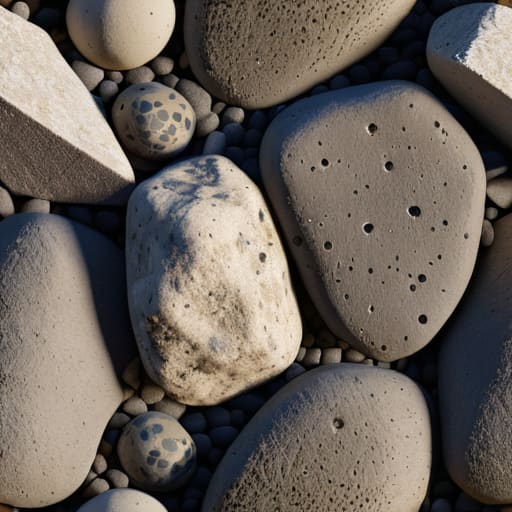
It matters more than most lads realize. If you’re using rounded river gravel, you’re essentially pouring marbles; it’ll flow easy, sure, but it won’t lock together. It’s got no “bite.” You want crushed, angular stone. Those sharp edges interlock like a jigsaw, creating a structural skeleton that actually holds. Rounded stone might make the pour feel smoother, but it’s a recipe for a weak, shifting mess once it sets. Give me sharp every time.