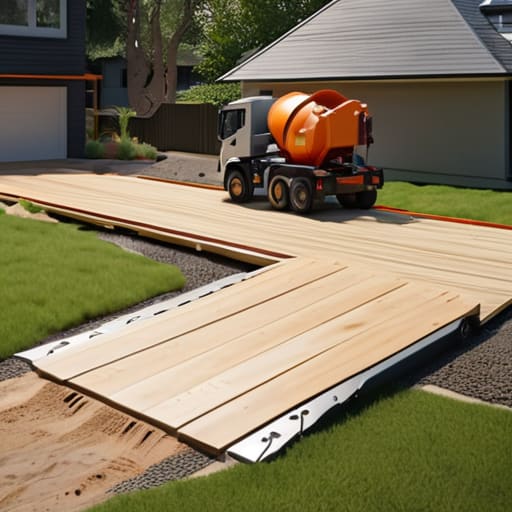
I remember standing on a site in ’94, watching a lad try to brace a shuttering wall with nothing but a few loose stakes and a prayer. The second that mixer started discharging, the whole thing began to bulge like a bloated gut, and I knew we weren’t just looking at a mess—we were looking at a catastrophe. Most people think that knowing how temporary works are managed is all about thick binders of paperwork and fancy digital checklists that stay tucked away in a site office. They’re wrong. Real management isn’t about what’s written in a manual; it’s about the physical reality of whether that formwork can actually hold the weight of the wet mix without bowing, breaking, or blowing out.
I’m not here to give you a lecture on theoretical engineering or some sanitized version of site safety. I’m going to tell you how it actually works when the rain is coming down and the pressure is on. We’re going to talk about the bracing, the supports, and the constant, eyes-on supervision that separates a professional pour from a total disaster. I’ll show you how to spot the weak links before they fail, because by the time the concrete is in, it’s already too late.
Table of Contents
Why a Temporary Works Management Plan Beats Luck Every Time

I’ve seen enough lads rely on “gut feeling” or a bit of extra timber to prop up a shuttering system, only to watch it bow the moment the pump starts pushing mix. Relying on luck isn’t a strategy; it’s a gamble with people’s lives and your own reputation. A proper temporary works management plan isn’t just some folder of paperwork to keep the health and safety inspector happy—it’s the difference between a slab that stays put and a collapse that ends your career. You need to know exactly who is checking the braces and who is signing off on the stability before a single drop of wet concrete hits the ground.
If you haven’t assigned specific temporary works coordinator responsibilities, you’re essentially asking for chaos. You can’t have five different people thinking someone else checked the bracing on the trench boxes or the stability of the scaffolding. Without a clear plan, the small things—the things that actually cause the failure—get missed in the rush to get the truck through the gates. You don’t want to find out your support system was inadequate after the weight of the pour starts pushing it out of alignment.
The Truth About Temporary Works Design Verification and Site Reality
I’ve seen it a hundred times: a lad pulls a sheet of paper out of his pocket, looks at a drawing, and assumes the props are going to hold because the engineer said so. That’s not how it works. You can have the most sophisticated temporary works design verification sitting in a folder in the site office, but if that design hasn’t been checked against the actual, messy reality of the ground you’re standing on, it’s nothing but expensive scrap paper. A drawing doesn’t know that the soil on the north side is wetter than expected, or that the vibration from the excavator next door is going to rattle those shoring piles loose.
Design is theory; the site is reality. This is where the temporary works coordinator responsibilities actually matter. It’s not about ticking boxes to keep the safety inspector happy; it’s about being the person who stops the pour because the bracing looks a fraction off. You need to be looking for the gap between what the paper says and what the steel is actually doing. If the design calls for a specific brace and you’ve swapped it for something “close enough” because the delivery was late, you aren’t managing the job—you’re just gambling with it.
Five Things That’ll Save Your Skin Before the First Truck Arrives
- Stop treating formwork like a bit of timber and some nails; if those shutters aren’t braced to handle the actual lateral pressure of a heavy pour, they’ll blow out, and you’ll be cleaning wet mix off your boots for a week.
- Check your ground before you even look at the steel; I’ve seen a thousand lads set up perfect scaffolding or heavy shutters on soft, uncompacted sub-base, only to watch the whole lot tilt the moment the weight hits.
- Get a proper eyes-on inspection of the joints and ties every single morning, because a loose bolt or a shifting brace that looked fine yesterday is exactly what causes a catastrophic failure when the concrete starts moving.
- Don’t let some lad on site start “adjusting” the temporary works just to make his life easier; if the design says a prop goes here, it goes there, and “making it fit” is how you end up with a collapsed slab.
- Watch the weather like a hawk, because if a sudden downpour or a heatwave hits while your temporary supports are under tension, the whole math of your setup changes, and you need to be ready to react.
The Hard Truth About Getting It Right
At the end of the day, managing temporary works isn’t about filling out a stack of paperwork just to tick a box for the inspector; it’s about respecting the physics of what you’re trying to hold up. You can have the best mix design in the world and the most expensive reinforcement, but if your shuttering isn’t braced properly or your trench support isn’t checked by someone who actually knows a structural failure when they see one, you’ve already lost. We’ve talked about the need for a proper management plan, the necessity of design verification, and why you can’t just wing it on site. If you skip the planning and the checking, you aren’t saving time—you are simply scheduling a disaster that will cost you ten times more to fix once the wet mix starts pushing your forms apart.
I’ve spent forty-three years watching lads try to take shortcuts, thinking they can outsmart the weight of the pour. They can’t. My advice to you is simple: treat your temporary works with the same respect you give the final structure. If you wouldn’t trust a foundation that was built on a prayer, don’t trust a formwork setup that hasn’t been rigorously verified. Do the work right when nobody is looking, especially in that critical hour before the truck arrives. Because when that concrete starts moving, it doesn’t care about your schedule—it only cares about whether or not you built a solid foundation of preparation to hold it.
Frequently Asked Questions
If the design looks good on paper, why do I still need to worry about the bracing once the truck starts discharging?
Because paper doesn’t feel the weight of six cubic meters of wet mix hitting a formwork all at once. A drawing can show you the math, but it won’t tell you that the ground under your bracing has gone soft from last night’s rain, or that a lad has knocked a strut loose with a shovel. Once that truck starts discharging, physics stops being a theory and starts being a heavy, moving force. If your bracing isn’t solid, the math won’t save you.
How do I know if my sub-base is actually ready for the weight of the formwork and the wet mix, or if I'm just setting myself up for a blowout?
You don’t “know” by looking at it; you know by testing it. If you walk across that sub-base and see even a hint of a footprint, or if you drive a small roller over it and it leaves a track, you’re already in trouble. I always tell my lads: if the ground feels soft, it is soft. Get a plate compactor on it until it rings, or better yet, get a penetrometer. If that base isn’t rock solid, your formwork is just a front-row seat to a blowout.
At what point during the pour should I be looking for signs that the temporary works are starting to give way?
You don’t wait for the pour to finish; you’re watching from the second the first load hits the hopper. The danger zone is when the mix is at its heaviest and most fluid. Watch your formwork for bulging, listen for the timber groaning, and keep a sharp eye on your bracing. If you see a strut shifting or a shutter bowing while that wet weight is still moving, stop the pump immediately. Once it starts moving, you’re just watching a collapse in slow motion.