I’ve spent forty-three years watching lads and homeowners alike pour money down the drain because they think a gravel driveway is just a pile of stones dumped on top of some dirt. They spend a fortune picking out the perfect decorative aggregate, obsessing over the colour and the crunch, but they completely ignore the most important part of how gravel driveways are constructed. I remember a job back in ’98 where a bloke called me, furious because his brand-new, expensive flint driveway had turned into a muddy soup after just three weeks of rain. I didn’t even need to look at the stone; I knew the second he mentioned the “sinkage” that he’d skipped the sub-base entirely.
I’m not here to sell you on fancy landscaping trends or overpriced additives that don’t work. What I’m going to give you is the unfiltered truth about what actually happens beneath the surface. We’re going to talk about excavation depths, the necessity of a properly compacted sub-base, and why your choice of geotextile membrane matters more than the stone itself. If you want to know the real way how gravel driveways are constructed so they actually stay put, you’re in the right place.
Table of Contents
Subgrade Preparation Techniques Fixing the Ground Before It Fails You
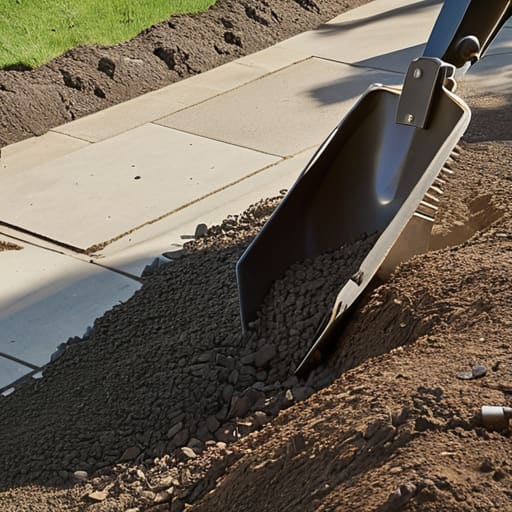
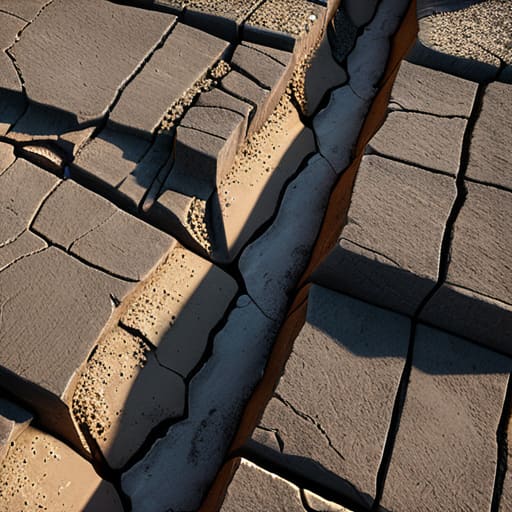
You can buy the most expensive, sharp-edged granite from the quarry in the world, but if you’re laying it over soft, uncompacted muck, you’re just throwing money into a hole. Most people think a driveway is just a layer of stone, but the real work happens in the dirt. You’ve got to strip back the organic matter—the grass, the roots, the topsoil—until you hit something that actually has some backbone. If you skip the proper subgrade preparation techniques and just spread your stone over the garden soil, the first heavy rain is going to turn your expensive gravel into a muddy soup.
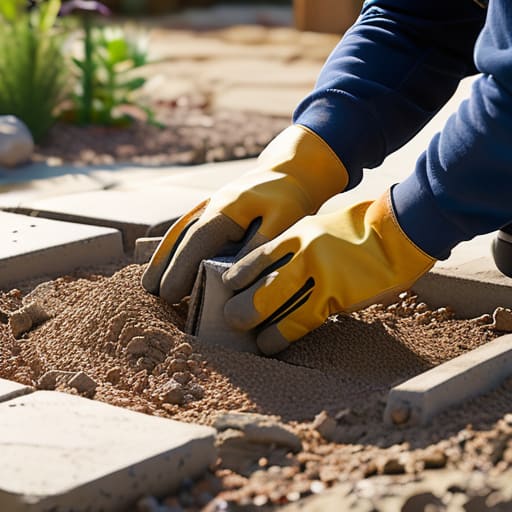
Once you’ve cleared the site, you need to think about separation and stability. I never start a job without a proper geotextile fabric installation underneath the base. That fabric acts as the barrier that stops your expensive stone from sinking into the mud over time. After that, it’s all about the layers. You don’t just dump a foot of gravel in and hope for the best; you build it up with crushed stone base layers that you compact properly as you go. If you don’t use a vibrating plate to pack that base down tight, you’ll be out there every summer preventing gravel displacement by raking it back into place.
Geotextile Fabric Installation the Only Barrier Between Success and Sludge
Now, listen. You can spend a fortune on the prettiest stone in the yard, but if you don’t get the geotextile fabric installation right, you’re just throwing money into a hole. I’ve seen too many lads skip this step because they think it’s an unnecessary extra, or they think the stone will just sit there on its own. It won’t. Without that membrane, your expensive aggregate is going to start migrating straight down into the soft soil. Before you know it, your clean gravel has vanished into the muck, and you’re left with a driveway that looks like a patch of muddy wasteland.
The fabric acts as the separator. It lets the water pass through—which is vital for proper gravel driveway drainage solutions—but it keeps the fine particles of your subgrade from mixing with your structural layers. When you lay it down, make sure there are no gaps and plenty of overlap at the seams; if the fabric shifts during the pour, you’ve already lost the battle. It’s about preventing gravel displacement and keeping your structural integrity intact. If you treat the fabric like an afterthought, don’t come crying to me when your driveway starts sinking by next spring.
The Three Things They Won't Tell You in the Sales Brochure
- Stop thinking about the stone and start thinking about the compaction. You can buy the most expensive, sharp-edged granite in the country, but if you haven’t run a heavy vibrating plate over your sub-base until it rings like a bell, you’re just laying expensive decoration on top of a sponge.
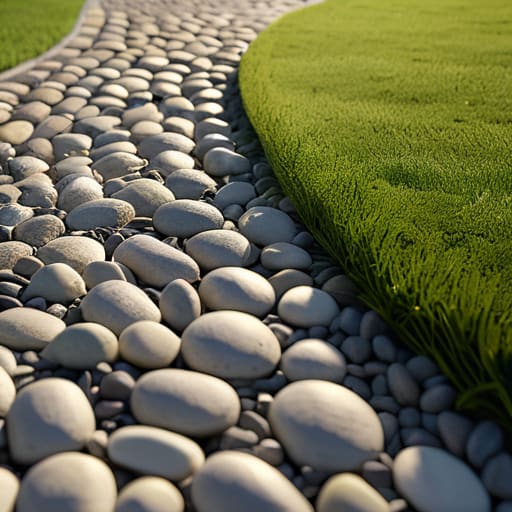
- Get the right grade of aggregate, and I mean actually right. If you go too fine, your driveway will turn into a dusty mess in the summer and a muddy soup in the winter. If you go too chunky, it’ll shift under a car tyre like a pile of loose marbles. You want something with a bit of “interlock”—angular stones that bite into each other rather than rounded river pebbles that just roll away.
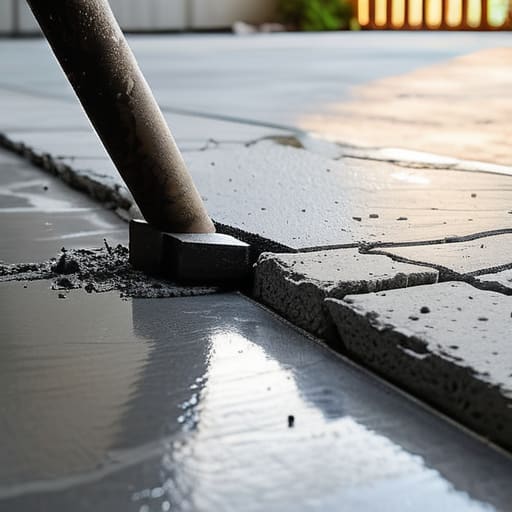
- Watch the edges like a hawk. A gravel driveway without a solid, rigid edge restraint is just a pile of rocks waiting to migrate into your flowerbeds. Whether it’s heavy-duty timber or concrete kerbing, that edge has to be anchored deep enough to hold the lateral pressure of the stone, otherwise, your driveway will be wider than the car every time you pull in.
- Don’t be tempted by the “water trick.” I’ve seen too many lads try to dampen the sub-base or the aggregate to make it settle faster or look better for the client. All you’re doing is messing with the moisture content and potentially creating soft spots that will telegraph through to the surface in six months’ time.
- Mind the crown. A driveway should never be dead flat. You need a slight camber—a gentle slope from the centre out to the edges—so the rainwater actually has somewhere to go. If you build a flat surface, you’re building a shallow pond, and standing water is the quickest way to rot out your sub-base and ruin the whole job.
The Long View on Gravel
Look, if you’ve followed me this far, you know I’m not interested in the pretty stuff you see in glossy brochures. A driveway isn’t just a layer of stone sitting on top of the dirt; it’s a structural system. You’ve got to get that subgrade compacted until it’s rock hard, lay down a proper geotextile to stop your expensive aggregate from disappearing into the mud, and build up a sub-base that actually has some substance to it. If you skip the heavy lifting underneath, you aren’t building a driveway—you’re just spreading a temporary layer of gravel over a future problem. Don’t let the easy way out become your biggest headache three years down the line when the ruts start forming.
At the end of the day, construction is about respect—respect for the materials and respect for the ground you’re standing on. You can buy the most expensive decorative stone on the market, but it won’t save a job that was rushed or a base that was neglected. Do it right the first time, follow the sequence, and take pride in the work you can’t even see. When you finish a job properly, you don’t just leave behind a driveway; you leave behind something that actually lasts. That’s the difference between a contractor who just wants to get paid and someone who actually knows how to build.
Frequently Asked Questions
How thick does that sub-base actually need to be before I can even think about laying the decorative stone?
Listen, if you’re looking for a magic number, you’re already asking the wrong question. It depends on what’s driving on it. A couple of pedestrians? You might get away with 100mm. But if you’re parking a heavy SUV or a delivery van on it, you better be looking at 150mm to 200mm of compacted MOT Type 1. Anything less and you aren’t building a driveway; you’re just decorating a future pothole.
If I'm dealing with heavy vehicles or delivery trucks, do I need to change the mix or the depth of the layers?
Listen, if you’re expecting a heavy delivery truck to roll over that driveway, you can’t just treat it like a garden path. You don’t change the “mix”—it’s gravel, not concrete—but you absolutely change the depth and the spec. You’ll need a thicker, more robust sub-base, likely using a heavier Type 1 MOT, and you better ensure that compaction is done in thin, disciplined layers. If the foundation is too thin, those wheels will punch right through it.
Once the gravel is down, how do I stop it from all migrating to the edges or getting pushed into the grass every time I park?
You’re looking at the edges because you didn’t give the gravel a boundary. If you just pour stone against a lawn, physics will win every single time—the weight of your car is going to push that aggregate straight into the soil. You need a proper edge restraint. Whether it’s heavy-duty timber, concrete kerbing, or even recycled plastic edging, it has to be set deep and pinned tight. If it isn’t locked in, your driveway is just a slow-motion landslide.