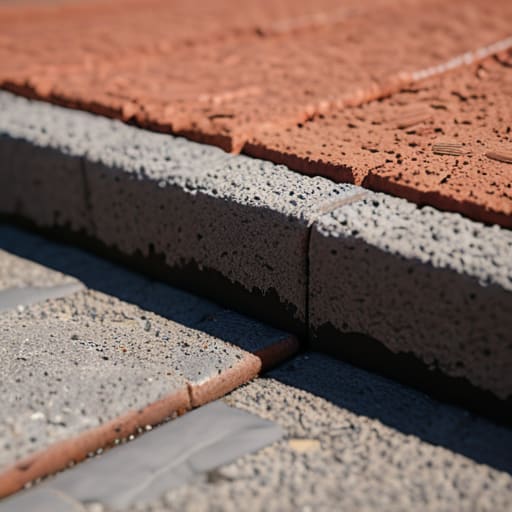
I remember standing on a driveway in Surrey back in ’98, watching a young lad try to convince a homeowner that a massive, jagged crack running through their new retaining wall was just “settling.” The truth was much simpler and much more embarrassing: they’d ignored exactly how movement joints work in masonry because they thought a continuous run of brick looked “cleaner.” They treated a living, breathing structure like it was a static piece of plastic, and within two seasons, the frost had done the rest. You can spend a fortune on the highest grade of facing brick and the most expensive mortar, but if you don’t give that wall a place to breathe, it will find its own way out through the face of the masonry.
I’m not here to give you a lecture from a textbook or some fancy architectural theory that doesn’t hold up when the temperature drops below freezing. I’m going to tell you how this actually works on a real site, from the ground up. We’ll talk about where those gaps need to go, why the filler material matters more than you think, and the exact mistakes that turn a professional job into a callback nightmare.
Table of Contents
Thermal Expansion in Masonry the Silent Force Breaking Your Brickwork

People think brick and mortar are static, like they’re carved out of a single block of stone. They aren’t. Every time the sun beats down on a south-facing wall or the frost bites into a foundation, that masonry is breathing. It’s moving. Thermal expansion in masonry isn’t some theoretical concept you read about in a textbook; it’s a physical, heavy-duty force that’s constantly pushing against itself. When the temperature climbs, those bricks expand, and if they don’t have a place to go, they’ll find the weakest point in your mortar bed and tear it wide open.
I’ve seen plenty of lads try to save a few quid by skipping the proper spacing, thinking a bit of extra mortar will hold it all together. It won’t. You’ll end up with staircase cracking that looks like a map of the local roads. That’s where you need to understand the difference between control joints vs expansion joints. A control joint is there to tell a crack where to happen so it stays neat and predictable, whereas an expansion joint actually gives the material the physical room to grow without crushing itself. If you don’t plan for that movement, you aren’t building a wall; you’re building a ticking time bomb.
Structural Crack Prevention Why You Cant Ignore the Gap
Now, listen. You can have the finest bricks and the most expensive mortar in the county, but if you don’t plan for where that wall is going to move, you’re just building a future demolition job. I’ve seen plenty of lads think they can just build a long, continuous stretch of brickwork and hope for the best. That’s a fool’s errand. Without proper structural crack prevention, you aren’t building a wall; you’re just setting a trap for the inevitable.
The real trouble starts when you confuse your types. I see it all the time: a lad thinks a tiny bit of mortar is going to do the job of a proper gap. You need to know the difference between control joints vs expansion joints if you want to sleep at night. A control joint is there to tell the brickwork, “crack here, where it’s tidy,” whereas an expansion joint is a genuine break to let the whole mass breathe. If you skip these, the masonry will find its own way to move, and it won’t be through a neat line—it’ll be a jagged, ugly staircase crack that’ll cost you a fortune to patch up.
Five Things You’ll Learn the Hard Way if You Skip the Joints
- Stop treating joints like an afterthought; they aren’t there to look pretty, they’re there to give the masonry a place to go when the sun hits it. If you don’t plan the gap, the wall will find its own way to move, and it won’t be through a neat line.
- Watch your sealant like a hawk. I’ve seen lads use cheap, rubbish stuff that looks fine on day one but shrinks to nothing in six months. If that sealant doesn’t have the elasticity to handle the movement, you might as well have left the joint empty.
- Don’t let your mortar bridge the gap. I’ve walked onto sites where the brickies have been “cleaning up” and accidentally smeared mortar into the movement joint. Once that’s in there, it’s no longer a joint—it’s a solid block, and you’re just waiting for the crack to appear.
- Size matters, and I’m not talking about your trousers. A joint that’s too narrow won’t allow for the actual expansion, and a joint that’s too wide is just a structural weakness. You need to calculate the gap based on the actual material and the environment, not just eyeball it.
- Mind the substrate. You can have the best-placed joint in the world, but if the foundation underneath is shifting or settling unevenly, that joint won’t save you. A movement joint manages thermal expansion, it doesn’t fix a dodgy sub-base.
The Bottom Line on Joints
Look, if you’ve followed me this far, you know I’m not interested in fancy finishes or aesthetic nonsense. I’m interested in whether that wall is still standing straight in five years. We’ve talked about how thermal expansion is a physical certainty, not an option, and how those movement joints are the only thing giving your masonry a place to breathe when the temperature swings. You can spend a fortune on the highest grade of brick and the most expensive mortar, but if you ignore the physics of movement, you’re just building a very expensive pile of rubble. It comes down to this: you either plan for the expansion now, or you’ll be paying for the repairs later when the cracks start spiderwebbing across your work.
At the end of the day, good groundwork isn’t about what looks good on the day the scaffolding comes down; it’s about the quiet satisfaction of walking past a job ten years later and seeing nothing but clean, straight lines. Don’t be the bloke who tries to save a few quid by skipping the joints or eyeballing the spacing. Do it right the first time—get your sub-base solid, your joints placed exactly where the specs say, and your curing managed. Build it to last, not just to finish. That’s the difference between a contractor and a proper tradesman.
Frequently Asked Questions
How do I know if I'm looking at a proper movement joint or just a crack that's gone wrong?
Look, it’s simple: a movement joint is a deliberate gap, usually filled with a clean, flexible sealant that sits flush or slightly recessed. It’s tidy, it’s straight, and it’s where it was planned to be. A crack? That’s a jagged, wandering mess that’s tearing through the mortar or the brick itself. If the line isn’t straight and the material isn’t designed to move, you aren’t looking at a joint—you’re looking at a failure.
If I'm pouring a new slab next to an existing wall, where exactly should that joint sit to stop them fighting each other?
Listen, if you pour that slab right up against the existing wall, you’ve already lost. They’re two different structures with different settlement rates and thermal movements; they’ll fight, and the slab will lose every time. You need an expansion joint—a proper soft filler—right at the interface. Don’t just butt them up. Leave a gap, fill it with something compressible, and let them move independently. If you don’t, that wall will crack your new work before the week is out.
What happens if the sealant in the joint fails—do I have to rip the whole lot out and start again?
No, you don’t need to rip the whole lot out—unless you’ve built the wall on a swamp. If the sealant has perished or pulled away, it’s a maintenance job, not a structural catastrophe. You rake out the old, dodgy stuff, clean the gap properly, and get a decent, flexible sealant back in there. But listen: if the sealant failed because the joint itself is moving too much, no amount of new silicone is going to save you.