I remember standing on a site in ’94, watching a lad try to save twenty minutes by shoving rebar directly against the shuttering. He thought he was being efficient, but all he was doing was signing a death warrant for that slab. People talk about high-spec mixes and expensive additives like they’re magic bullets, but they completely miss the point of how concrete cover protects steel. You can buy the most expensive, high-strength concrete in the country, but if that steel is sitting too close to the surface, the salt and moisture will find it. Once that oxidation starts, it’s not a matter of if the concrete cracks, but when.
I’m not here to give you a lecture from a textbook or some fancy engineering theory that doesn’t work when it’s raining sideways on a Tuesday. I’m going to tell you how it actually works on the ground. I’ll show you why those little plastic spacers matter more than the brand of the truck, and why getting the depth right is the only thing standing between a solid foundation and a pile of crumbling rubble. We’re going to talk about the real-world physics of cover, without the fluff.
Table of Contents
Fighting Chloride Ion Penetration Before It Starts

Now, you can talk all day about rebar corrosion prevention and the fancy chemical additives in a mix, but if you aren’t managing chloride ion penetration from the jump, you’re just delaying the inevitable. I’ve seen it a hundred times: a client gets a beautiful, smooth finish, but they’ve poured it too close to a coastal road or a driveway where salt gets kicked up. Once those chlorides find their way through the pores of the concrete, they’re coming for that steel like a heat-seeking missile.
The real trick isn’t just the thickness of the slab; it’s maintaining that high-alkalinity environment that keeps the steel in a state of passivation. That’s a fancy way of saying the concrete needs to stay chemically “tough” enough to form a protective layer around the rebar. If your mix is too porous because someone was lazy with the water-cement ratio, or if you let the surface dry out too fast without curing, you’ve essentially built a highway for salt and moisture. You aren’t just building a floor; you’re building a shield, and a thin, porous shield is no shield at all.
Why Minimum Concrete Cover Requirements Are Non Negotiable
Look, I’ve seen lads on site treat the spec sheet like a suggestion rather than a law. They’ll see a bit of mesh or some rebar sitting too close to the edge and think, “It’s only a few millimetres, what’s the harm?” The harm is that you’re effectively building a countdown clock for structural failure. Those minimum concrete cover requirements aren’t just arbitrary numbers pulled out of a textbook to make life difficult; they are the only thing standing between your steel and a slow, silent death. If you don’t give that steel enough room to breathe within the mix, you aren’t building anything permanent.
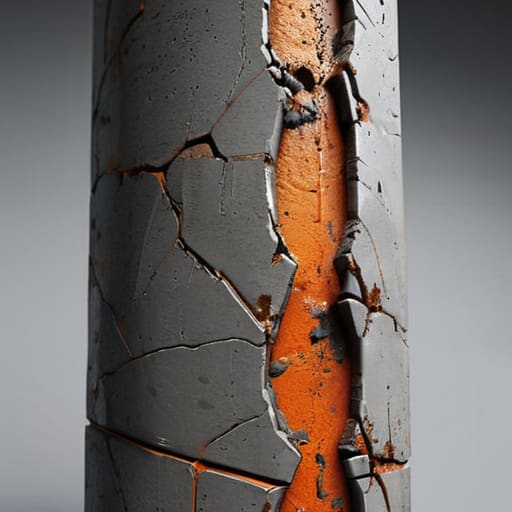
When you skimp on the depth, you’re inviting carbonation in reinforced concrete to move in and take over. Once the alkalinity of the mix drops because the CO2 has worked its way through a thin layer, that protective layer around the steel vanishes. Without that chemical shield, you aren’t just looking at a few cracks; you’re looking at the steel expanding as it rusts, which will blow your concrete apart from the inside out. You can buy the most expensive mix in the world, but if you don’t respect the cover, you’re just wasting money.
Five Ways to Make Sure That Cover Actually Does Its Job
- Stop treating spacers like an afterthought. If you’re just tossing plastic chairs onto a mesh sheet and hoping they stay put while the lads are walking over it, you’ve already lost. If those spacers aren’t tied in or if they shift during the pour, you’ll end up with a pocket of nothingness where the steel sits too close to the edge. Once that happens, the cover is a lie.
- Watch the water like a hawk. I’ve seen it a thousand times—the mix is a bit stiff, so someone grabs the hose and gives it a splash to make it easier to spread. You think you’re being helpful, but you’re actually washing the cement paste away from the steel and opening up microscopic highways for salt and moisture to crawl straight to the rebar.
- Don’t trust a “close enough” sub-base. You can have the perfect spec for your cover, but if your blinding or your hardcore is uneven and settles under the weight of the wet mix, your steel is going to sink. If the steel sinks, your cover disappears, and you might as well not have bothered with the rebar at all.
- Get your vibrator work right, or don’t bother. If you’re over-vibrating, you’re going to cause segregation, where the heavy stuff sinks and the watery, weak stuff rises to the top. That leaves the steel sitting in a weak, porous layer of cream that won’t protect a thing from the elements.
- Mind the edges during the pour. When you’re working the corners or the ends of a slab, it’s easy to let the aggregate pile up against the shuttering, pushing the steel toward the face. If you don’t check that the mesh is sitting exactly where the drawings say it should be before the truck is empty, you’re just building a future crack.
Don't Let a Cheap Fix Become a Costly Failure
At the end of the day, it all comes down to the same thing: you can’t fix a bad pour once the slab has set. We’ve talked about why that cover matters, why the chloride ions are looking for any excuse to get to your rebar, and why those minimum requirements aren’t just “suggestions” from a textbook. If you skimp on the cover or let the lads mess with the mix to make it easier to spread, you aren’t saving time—you’re just scheduling a future repair. You have to respect the chemistry of the concrete and the physical barrier it provides. If the cover isn’t there, or if it’s compromised by a sloppy pour, the steel is sitting on borrowed time.
I’ve spent forty-three years watching people try to cut corners on the things they can’t see once the job is done. They think because the surface looks smooth and the level is spot on, the job is a success. But a real professional knows the truth: the real work is what’s happening deep inside that mass. Do the job right the first time. Get your spacers in, check your depths, and don’t let anyone tell you a little less cover won’t matter. Build it to last, not just to look good for the handover, because the ground and the weather don’t care about your schedule—they only care about the quality of your work.
Frequently Asked Questions
If I've got a really high-quality, dense mix, can I get away with shaving an inch off the cover to save on material costs?
Listen, I’ve heard that exact line more times than I’ve had hot dinners. You think a fancy, high-density mix is some kind of magic shield? It isn’t. You can buy the most expensive, low-permeability concrete on the market, but if you shave off that inch of cover, you’re just shortening the fuse on a bomb. Once the moisture and chlorides find a way through—and they always do—that steel is finished. Don’t trade long-term structural integrity for a few quid on the mix.
What happens to the steel if the sub-base settles and causes the slab to crack right through the cover zone?
That’s exactly how it starts. You get a crack because the sub-base wasn’t compacted right or the ground shifted, and suddenly that crack is a direct highway straight to your rebar. Once that crack opens up, the concrete cover is useless—it’s gone. Water, salts, and oxygen dive right down that fissure and start eating the steel. You aren’t just looking at a crack in the slab anymore; you’re looking at a ticking clock for corrosion.
Does using a plastic additive or a different aggregate change how much cover I actually need to stop the rust?
Look, you can throw all the plasticizers and fancy additives you want into the drum to make that mix flow like water, but don’t go thinking it lets you skimp on the cover. Additives might help with workability or density, sure, but they aren’t a magic shield. If you try to shave an inch off your cover because you’ve got “better” concrete, you’re just building a ticking time bomb. The physics don’t change.