I was standing on a job in Surrey last Tuesday, looking at a “premium” resin-bound driveway that had started spider-webbing after only six months. The homeowner was distraught, pointing at the cracks and asking what went wrong with the expensive materials. I didn’t even look at the resin; I looked at the soil underneath. You can buy the most expensive stone and the fanciest finish in the world, but if you think a complete guide to driveways is just about picking a pretty colour from a brochure, you’re being sold a lie. Most of these guides focus on the surface because that’s what looks good in the catalogue, but the surface is the least important part of the job.
I’ve spent forty-three years watching people pour money down the drain because they skipped the foundations. In this guide, I’m not going to give you any of that glossy, salesman talk. I’m going to tell you about the stuff that actually matters: the sub-base, the compaction, and why you should never let a driver add water to a mix just to make it easier to spread. This is the real, unvarnished truth about building something that actually stays put.
Table of Contents
Why Subbase Preparation Techniques Dictate Your Long Term Success
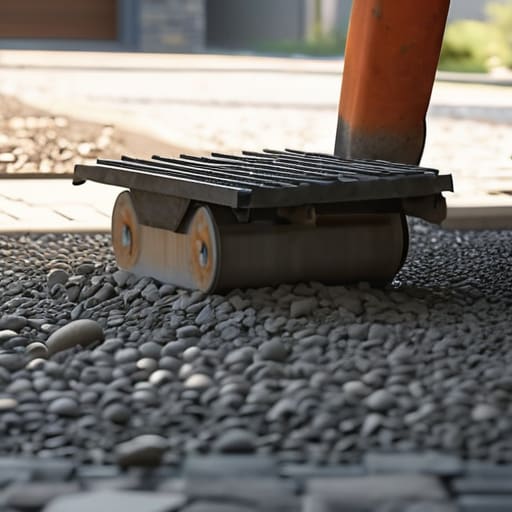
I’ve lost count of how many times I’ve seen a homeowner pour a beautiful, expensive slab only to watch it heave and split two years later. They’ll blame the mix or the supplier, but they’re looking at the wrong end of the problem. The truth is, your subbase preparation techniques are the only thing standing between a driveway that lasts thirty years and one that turns into a jigsaw puzzle of cracks. If you haven’t compacted that MOT Type 1 until it’s rock hard, you aren’t building a driveway; you’re just laying a very expensive crust over a sponge.
People get caught up in the shiny stuff—arguing over asphalt vs concrete durability or picking out the perfect stone color—while the actual foundation is being laid on loose, uncompacted soil. You can have the finest paving on the market, but if there’s any movement in the ground underneath, that surface is going to follow it. It’s not about what you see when the job is done; it’s about the unseen layers that hold everything in place when the heavy vehicles start rolling over it.
Choosing Between Asphalt vs Concrete Durability Under Pressure
Now, when people start looking at their driveway paving options, they usually get stuck on the surface finish. They want to talk about the colour of the stones or the smoothness of the blacktop. But if you want to talk about real-world performance, we need to talk about asphalt vs concrete durability when the ground actually starts moving.
Asphalt is forgiving. It’s flexible, which means it can handle a bit of seasonal shifting without looking like a jigsaw puzzle. If you’ve got a site with a bit of movement, asphalt will take it better than a rigid slab. However, it’s a high-maintenance beast. You’ll be sealing it, patching it, and watching it soften in a heatwave. Concrete, on the other hand, is a different animal entirely. Once that slab is cured and the joints are cut right, it’s built like a fortress. It won’t rut under a heavy SUV like asphalt might, but it’s unforgiving. If your subbase preparation techniques were shoddy, concrete won’t bend; it will simply snap. You aren’t just choosing a look; you’re choosing how you want to deal with failure ten years down the line.
Five Things They Won't Tell You Until the Cracks Appear
- Stop obsessing over the finish and start obsessing over the compaction. I’ve seen lads pour a perfect, smooth slab over a sub-base that was nothing more than loose rubble and dust; it doesn’t matter how much you paid for the concrete if the ground underneath shifts like a sandcastle in a tide.
- Watch the clock and the clouds like a hawk. If you’re pouring in the midday sun and it’s bone dry, that water is going to evaporate out of your mix before it’s had a chance to set properly, leaving you with a surface that’ll flake off like old skin within a year.
- If a driver shows up and tells you the mix is “a bit stiff” and asks for a splash of water to make it easier to spread, you tell him no. Adding water on-site is the fastest way to kill your strength and turn a premium pour into a glorified puddle of grey mush.
- Don’t skimp on the expansion joints just because you want a “seamless” look. Concrete needs room to breathe and move; if you don’t give it a designated place to go when the temperature drops, it’ll find its own way through your driveway in the form of ugly, uncontrolled cracks.
- Curing isn’t an optional extra—it’s the job. You can’t just pour it and walk away; you need to keep that moisture in there, whether that’s with a curing compound or a bit of polythene, otherwise you’re just baking the life right out of your new driveway.
Don't Let the Pretty Stuff Fool You
At the end of the day, a driveway isn’t just a bit of tarmac or a slab of concrete sitting on top of the dirt. It is a system. If you’ve listened to a word I’ve said, you know that the choice between asphalt and concrete is secondary to the work you do before the first truck even rolls onto the site. You can buy the most expensive, high-spec mix in the country, but if your sub-base is soft or your compaction is lazy, you are just paving a way for cracks to appear. Don’t get distracted by the finish; remember that the strength of the driveway is decided in the trenches, long before anyone starts worrying about the surface colour.
Look, I’ve spent forty-three years watching people try to cut corners to save a few quid or a few hours of labour, and I’ve seen the results every single time. It always ends the same way—with a homeowner calling me to ask why their expensive new driveway looks like a jigsaw puzzle after one bad winter. Do it right the first time. Respect the sequence, mind the weather, and never, ever let someone add extra water to a mix just to make it “workable.” If you build it on a foundation of proper preparation and patience, that driveway will still be standing long after the cheap jobs have crumbled into the soil.
Frequently Asked Questions
How much thickness do I actually need for my sub-base if I'm planning on parking a heavy SUV on it?
Listen, if you’re parking a heavy SUV, you aren’t just dealing with weight; you’re dealing with point loads. You can’t just throw down a thin layer of MOT Type 1 and hope for the best. For a vehicle like that, I wouldn’t dream of anything less than 150mm of compacted sub-base. And don’t just dump it in—you need to compact it in layers. If that base isn’t rock solid and well-graded, that SUV will find the soft spots every single time.
If I see a hairline crack appearing in my concrete a few months after the pour, is it a structural failure or just something I need to live with?
Look, don’t panic just yet. If it’s a hairline crack—something you can barely catch with your fingernail—it’s usually just plastic shrinkage. That happens when the surface dries faster than the slab can settle. It’s an eyesore, but it’s rarely structural. However, if that crack starts widening or you see the edges lifting, then you’ve got a real problem with your sub-base or your mix. Watch it. If it grows, call me.
When is the right time to stop worrying about the weather and actually start the pour, or am I just asking for trouble?
Look, you don’t “stop worrying” about the weather; you respect it. If the sky looks bruised or the ground is holding puddles, you stay in the van. If you’re pouring in heat, you better have a curing compound or wet hessian ready, or that surface will shrink and crack before you’ve even finished your tea. If you’re pouring in the cold, you need heaters. Don’t gamble with a mix just to hit a deadline.