I remember standing on a site in Cornwall back in ’94, looking at a pristine, freshly poured slab that looked like it could hold up the moon. Six months later, I was called back to see it buckling like a cheap biscuit. The client was blaming the mix, blaming the weather, even blaming the guy on the vibrator, but I knew better. It wasn’t a bad pour; it was the salt in the air and the grit in the aggregate. People love to get lost in fancy chemical equations when they talk about how chlorides attack reinforcement, but they miss the simple truth: those tiny salt ions are just looking for a way in. Once they find a path through the pores, they don’t just sit there—they start a slow-motion demolition of your steel from the inside out.
I’m not here to give you a university lecture or sell you some overpriced chemical additive that won’t work if your sub-base is rubbish. I’m going to tell you exactly what happens when that salt gets a foothold and why your steel starts to rot before you even see a crack on the surface. We’ll skip the fluff and get straight to the reality of permeability, cover, and why your choice of aggregate matters more than the brochure says.
Table of Contents
Cracking the Code of Passive Film Breakdown in Concrete

Now, you might think that because the steel is buried deep inside a block of concrete, it’s safe. It isn’t. Under normal conditions, the high alkalinity of the concrete creates a thin, protective layer around the rebar—what the textbooks call a passive film. This layer is the only thing standing between your steel and total disaster. But that film is fragile. Once the chlorides start migrating through the matrix, they don’t just sit there; they actively hunt for weaknesses. When they reach a certain concentration, you hit what we call the chloride threshold for corrosion initiation, and that’s when the protection vanishes.
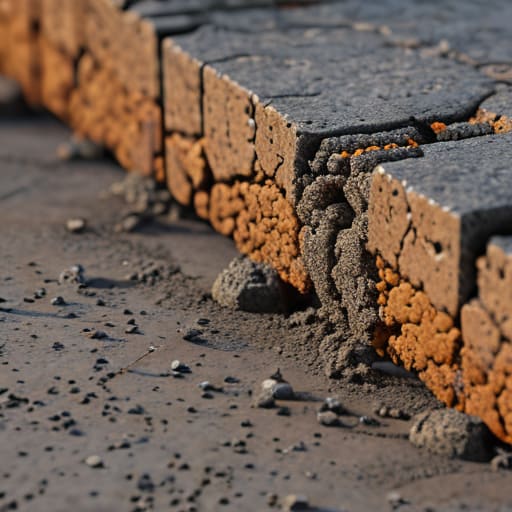
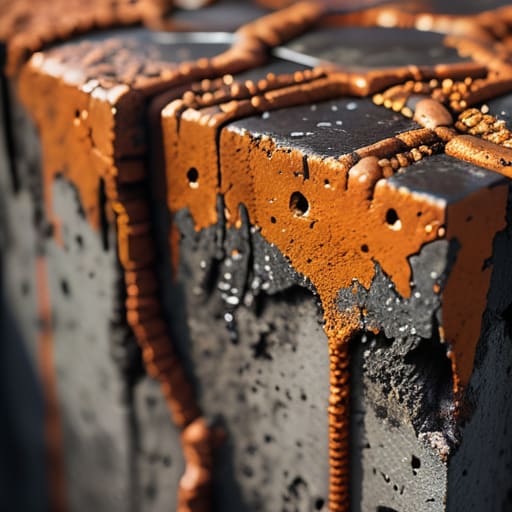
Once that film is breached, the damage isn’t uniform. It’s not a slow, even rust that you can see on the surface. Instead, you get a pitting corrosion mechanism where the metal is eaten away in concentrated, localized spots. It’s like a cancer inside the slab. You won’t see a single crack on the surface while this is happening, but underneath, the steel is losing its cross-section and its grip. By the time the concrete starts spalling or cracking, the structural integrity of reinforced concrete has already been compromised long ago.
Concrete Permeability and Chloride Ingress the Invisible Entryway
Now, here is the thing people always miss: concrete isn’t some solid, impenetrable block of stone. Even when it looks tight, it’s more like a hard sponge. It’s full of microscopic capillaries and tiny voids left behind when the water evaporates. This is where concrete permeability and chloride ingress become your biggest headache. If you’ve used a mix that’s too wet—and I’ve seen enough lads add water to the drum just to make the pour “slumpier” and easier to spread—you’ve basically built a highway for salt. Those extra voids act like open doors, allowing chloride ions to migrate straight through the matrix toward your steel.
Once those ions start moving, they aren’t just sitting there; they are hunting for the reinforcement. It’s a slow, invisible crawl, but once the concentration hits a certain level at the steel’s surface, you’ve reached the chloride threshold for corrosion initiation. At that point, the protection is gone. You won’t see a thing on the surface for months, or even years, but underneath, the chemistry is already turning against you. By the time you see a hairline crack or a bit of rust staining, the damage is already well underway.
Five Ways to Stop the Rot Before It Starts
- Watch your water-cement ratio like a hawk; if you’re adding extra water on-site just to make the mix easier to spread, you’re basically building a highway for chlorides to drive straight down to the rebar.
- Don’t skimp on the cover; if your lads are tucking the steel too close to the surface, you’ve given the salt and moisture a head start they’ll win every single time.
- Mind the cracks in the sub-base and the slab itself; a structural crack isn’t just an eyesore, it’s a direct, unhindered pipe for salt-laden water to bypass your concrete’s protection entirely.
- Use the right mix for the environment; if you’re working near the coast or on a road being salted in winter, you better be using a low-permeability mix with supplementary cementitious materials to choke off those pores.
- Get the curing right from minute one; if you let the surface dry out too fast before it’s properly hydrated, you’ll end up with a thirsty, porous skin that sucks up chlorides like a sponge.
The Long Game: Don't Let Your Work Rot from Within
Look, we’ve covered the science, but don’t let the technicalities distract you from the reality on the ground. You’ve got chlorides looking for every microscopic pore and hairline crack to find their way to that steel. Once they breach that passive layer we talked about, it’s game over; the corrosion starts, the rebar expands, and the concrete starts pushing back against itself until it splits. Whether it’s salt from the road or poor quality aggregates, if you don’t manage the permeability of your mix and keep those chlorides out, you aren’t building a structure—you’re just building a ticking time bomb that’ll be your problem ten years down the line.
At the end of the day, my job—and yours—isn’t just about getting a smooth finish or a level slab. It’s about making sure what’s underneath stays solid for the next fifty years. Don’t be the bloke who skimps on the cover or ignores the environmental risks just to save a few quid on the mix. Take the time to get the density right and protect that reinforcement like your reputation depends on it, because it does. If you do the groundwork properly and respect the chemistry, your pour will still be standing long after the shortcuts have crumbled away.
Frequently Asked Questions
If I've used a high-quality mix, can I still get problems if the ground I'm pouring on is salty or near the coast?
Listen, you can order the most expensive, high-spec mix from the plant, but it won’t save you if the ground is working against you. If you’re pouring near the coast or on salty soil, those chlorides are already waiting. They don’t care how good your mix is; they’ll find their way through the pores and start eating your rebar. If the sub-base is contaminated, you’re basically building a ticking time bomb under your slab.
How can I tell if the chloride has actually reached the steel once the slab is already poured and finished?
You can’t see it with the naked eye once that slab is finished, and that’s the trouble. You’re looking for the “smoking gun”—rust staining bleeding through the surface or, worse, hairline cracks following the line of the rebar. But by the time you see those, the damage is done. If you’re serious, you don’t guess; you get a specialist to take a core sample and test the chloride profile at different depths.
Does adding more cement to the mix actually help stop the chlorides from getting through, or am I just wasting money?
Look, I get asked this every time a job gets expensive. You think more cement means a tighter seal, but it’s a double-edged sword. Yes, a richer mix can reduce permeability, but if you go too heavy on the cement, you’re just inviting shrinkage cracks. Those cracks are like open highways for chlorides. You aren’t just wasting money; you’re potentially creating new entry points. Focus on the water-cement ratio instead—keep it low, keep it tight.