I remember standing on a site in the Midlands back in ’98, watching a lad try to justify a massive crack in a fresh slab by telling me the “mix was too weak.” He’d spent a fortune on high-spec aggregate but hadn’t given a damn about the internal tension. People love to talk about how fibre reinforcement works like it’s some kind of magic wand that fixes a bad pour, but let me tell you: those little bits of polypropylene or steel aren’t there to turn a rubbish job into a masterpiece. They are there to manage the internal stresses that start the moment the water begins to react, and if you don’t understand that, you’re just throwing money into a mixer.
I’m not here to sell you on the latest marketing brochure or give you a lecture from a textbook. I’m going to tell you exactly how fibre reinforcement works in the real world—the messy, windy, unpredictable world where the temperature drops and the sub-base isn’t as level as the site manager promised. I’ll show you where these fibres actually earn their keep and, more importantly, where they fail when you rely on them to cover up a lack of proper preparation.
Table of Contents
Micro Reinforcement Mechanisms Fighting Cracks Before They Start
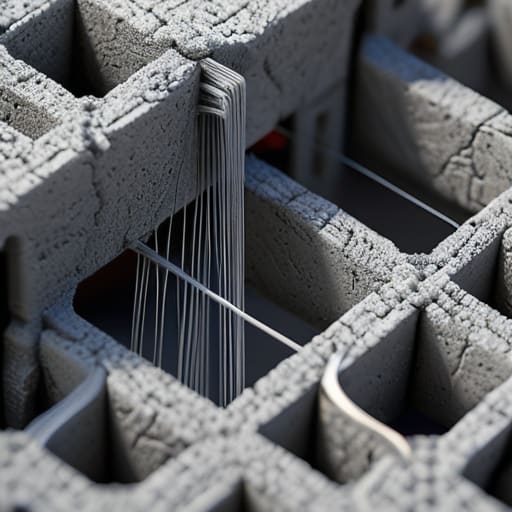
Now, don’t get it twisted—fibres aren’t there to replace rebar or heavy steel mesh in a structural slab. If you’re building a retaining wall, you still need your steel. What fibres actually do is tackle the battle happening at a microscopic level. As the mix sets, it wants to shrink, and that’s when the tension starts pulling the paste apart. This is where micro-reinforcement mechanisms come into play. Instead of letting one big, ugly crack rip through your finish, the fibres act like millions of tiny anchors, stitching the matrix together. They bridge those microscopic gaps before they can turn into a hairline fracture that you can stick a screwdriver into six months later.
It’s really about crack control in concrete during that critical window when the hydration heat is doing its thing. By distributing those tiny bits of polymer or steel throughout the entire volume, you’re improving the ductility and toughness of the whole mass. You aren’t just making a harder surface; you’re creating a material that can handle a bit of internal stress without snapping like a biscuit. It’s about stopping the failure before it even has the chance to show its face.
Tensile Strength Enhancement Building Muscle Inside the Mix
Now, let’s get one thing straight: concrete is brilliant at being squashed, but it’s rubbish at being pulled. That’s the fundamental problem. You can pour the most expensive, high-spec mix in the world, but the moment you get any tension on that slab—whether it’s from a heavy vehicle or the ground shifting an inch—it wants to snap like a dry biscuit. This is where we talk about tensile strength enhancement. By adding fibres, you aren’t just throwing bits of fluff into the wet mix; you are essentially building a skeletal system inside the paste.
When the concrete starts to experience stress, those fibres act like thousands of tiny bridges spanning the microscopic gaps. Instead of a single crack racing from one side of the slab to the other, the energy gets caught. You’re looking for ductility and toughness improvement here, not just raw hardness. It turns a brittle, unforgiving mass into a composite that can actually absorb a bit of a beating. If you understand that the fibres are there to catch the tension before it turns into a structural nightmare, you’ll stop treating them like an optional extra and start treating them like the muscle they are.
Five Things the Brochure Won't Tell You About Fibres
- Don’t mistake fibres for rebar. They aren’t there to stop a building from collapsing if the ground shifts; they are there to stop the microscopic cracks from turning into a spiderweb of failure while the slab is still wet.
- Watch your water content like a hawk. I’ve seen lads try to “loosen up” a fibre-reinforced mix by adding a hoseful of water on site, and all they’ve done is wash out the very bond the fibres need to actually grab onto the cement paste.
- You still need to respect the sub-base. I don’t care if you’ve got enough polypropylene in that mix to build a bridge; if you’re pouring on soft, uncompacted muck, that slab is going to crack, fibre or no fibre.
- Check your mix design before the truck arrives. If you’re ordering a standard mix and expecting the fibres to do all the heavy lifting, you’re dreaming. The dosage has to be right for the job, or you’re just paying for expensive dust that won’t do a lick of work.
- Don’t neglect the traditional joints. Fibres help with shrinkage, but they aren’t magic. If you don’t cut your control joints at the right depth and the right time, the concrete will find its own way out, and it won’t be pretty.
The Bottom Line on Fibres
Look, at the end of the day, fibres aren’t some magic wand that makes a bad job good. They aren’t going to fix a slab poured on top of soft, uncompacted clay, and they won’t save you if the driver adds a hoseful of water to the drum just to make it easier to spread. What they actually do is provide that internal web that holds the matrix together while the hydration is happening. They tackle the micro-cracks at the source and give the mix a bit of muscle to handle the shrinkage that happens the moment the sun hits it. If you understand that they are there to manage the internal stresses rather than replace proper steel or a decent sub-base, you’ll use them right.
My advice? Don’t treat fibre reinforcement as an optional extra or a way to cut corners on your reinforcement schedule. Treat it as another layer of defence in a job that’s always trying to fail. A good pour is about layers of protection—from the ground up, through the mix, and into the curing process. When you get the sub-base right, the mix right, and you use fibres to stiffen the internal structure, you aren’t just pouring concrete; you’re building something that’s actually going to last long after we’ve all retired. Respect the process, and the concrete will respect you.
Frequently Asked Questions
If I'm using fibres to stop the cracking, do I still need to bother with steel mesh or rebar?
Listen, if you’re asking that, you’re probably looking for a shortcut. Fibres are brilliant for stopping that spiderweb shrinkage cracking while the slab is still green, but they aren’t magic. They don’t replace the structural backbone. If you’ve got heavy loads, vehicle movement, or a sub-base that isn’t as solid as you think it is, you still need your steel. Fibres manage the micro; steel manages the macro. Don’t swap one for the other.
Won't adding all those fibres make the mix too thick and a nightmare to screed and finish?
Look, I’ve seen lads stand there staring at a fibre mix like it’s a pile of wet gravel, terrified they won’t be able to move it. If you’re using the right dosage and a decent slump, it’s not a nightmare. It’s just a different beast. You don’t fight the fibres; you work with them. If it’s too stiff to screed, you haven’t got a fibre problem—you’ve got a mix design problem.
How do I know if I'm getting the right type of fibre for the job, or am I just throwing money at the truck for no reason?
Look, if you’re just grabbing whatever’s cheapest, you’re probably wasting your money. You need to decide what you’re actually fighting against. If you’re worried about those tiny hairline cracks that show up while the slab is still sweating, you want micro-synthetic fibres. But if you’re pouring a heavy-duty driveway or something that’s going to see real abuse, you need macro-synthetic or steel to handle the structural load. Don’t just throw expensive dust into the truck and hope for the best.