I remember standing on a driveway in Surrey about ten years ago, watching a lad try to explain to a very angry homeowner why his brand-new slab was splitting like a dried riverbed. The homeowner had spent a fortune on high-spec, fiber-reinforced concrete, thinking that “strength” was the magic word. He didn’t realize that strength is useless if you don’t give the slab a place to go when the temperature shifts. People spend all their time obsessing over the grade of the mix, but they completely misunderstand how movement joints work. You can pour the most expensive concrete in the world, but if you haven’t planned for the expansion and contraction, you aren’t building a driveway—you’re just timing a disaster.
I’m not here to give you a lecture from a textbook or some glossy brochure filled with engineering jargon. I’m going to tell you how it actually works when the sun hits that slab or when the ground underneath decides to heave. I’ll show you where those joints need to go, why the depth matters more than the width, and why skipping the prep work is the fastest way to turn a professional job into a crack-filled mess.
Table of Contents
Managing Thermal Expansion and Contraction Before the Cracks Appear
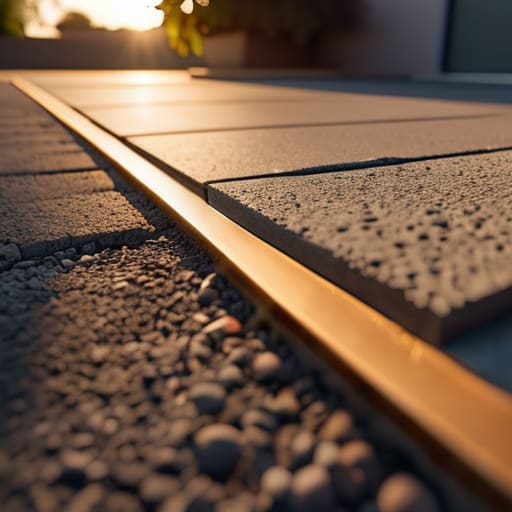
You have to understand that concrete is a living thing when it comes to temperature. It breathes. In the height of summer, that slab is going to grow, and in the dead of winter, it’s going to shrink. If you don’t account for thermal expansion and contraction, you aren’t just asking for a few hairline fractures; you’re asking for the whole slab to heave or buckle. I’ve seen lads pour a massive patio in July, thinking they were being clever with a high-strength mix, only to watch it tear itself apart two years later because they treated the slab like a dead piece of stone instead of something that moves with the sun.
This is where the difference between an expansion joint vs control joint becomes your bread and butter. A control joint is just a polite suggestion to the concrete—a weakened line that says, “if you’re going to crack, do it here.” But an expansion joint? That’s a genuine gap, filled with something compressible, designed to let the slab actually move without crushing itself against a wall or another slab. If you skip the real expansion gaps because you’re trying to save a few quid on materials, you’re basically building a ticking time bomb into your groundwork.
Expansion Joint vs Control Joint Choosing the Right Defense
Now, listen close, because this is where I see most lads get tripped up. They think a joint is just a line in the concrete, but there’s a world of difference between an expansion joint and a control joint. A control joint—or what I call a “weakened plane”—is just you telling the concrete, “If you’re going to crack, do it right here where I’ve pre-scored you.” You’re essentially guiding the stress so it doesn’t wander off and ruin the whole slab. It’s about preventing structural cracking by giving the material a predictable place to let go.
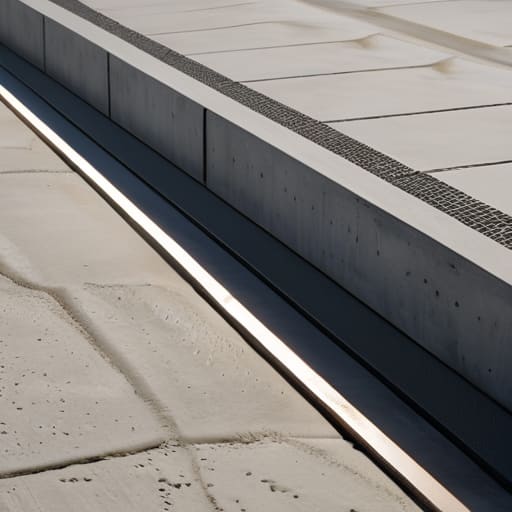
An expansion joint, on the other hand, is a completely different animal. You aren’t just guiding a crack; you’re creating a physical gap to allow for building movement accommodation. This is where you leave a space between two independent sections of concrete, usually filled with a compressible material, so they don’t smash into each other when the heat hits. If you try to use a control joint where you actually need an expansion joint, you’re going to end up with crushed edges and a mess. You’ve got to respect the difference if you want that slab to last more than two seasons.
Five Things You’ll Get Wrong About Joints (And How to Get Them Right)
- Stop treating control joints like an afterthought. You don’t just saw a line in the surface once the concrete is hard; you need to cut deep enough to actually create a weak point. If you don’t cut at least a quarter of the slab’s depth, the concrete isn’t going to crack where you want it—it’s going to crack wherever it feels like, and usually, that’s in the middle of your nice clean finish.
- Watch the spacing like a hawk. I’ve seen lads try to stretch a slab out too far because they were lazy with the saw, thinking they could save time. It doesn’t work that way. If your joints are too far apart, the internal tension builds up until the slab gives up the ghost. Follow the rule of thumb for the thickness, or don’t bother pouring at all.
- Clean out the debris or don’t bother with the sealant. I’ve walked onto sites where they’ve thrown some sealant over a joint that was still full of slurry and grit. That sealant won’t bond to nothing, and as soon as the first big temperature swing hits, the water gets in, the sub-base softens, and you’ve got a mess on your hands. A joint is only as good as the gap you’ve prepared for it.
- Don’t forget the perimeter. People get so obsessed with the joints in the middle of the slab that they forget the concrete needs to breathe where it meets the house or the garage wall. If you don’t put an expansion joint at those edges, the slab is going to push against the structure, and you’ll be looking at cracks in the brickwork next, not just the concrete.
- Timing is everything with the pour. You can have the best joint plan in the world, but if you let the surface dry out too fast before you’ve even thought about the joints, you’ve already lost the battle. Shrinkage starts the moment the water begins to evaporate, so if you aren’t ready to manage those joints early, you’re just pouring money into a future crack.
The Bottom Line on Joints
At the end of the day, you have to stop thinking of joints as an afterthought or a way to make the slab look “tidy.” They are functional tools designed to give the concrete a place to go when the temperature swings or the ground shifts an inch. If you’ve understood the difference between an expansion joint that lets a slab breathe and a control joint that tells a crack where to live, you’re already ahead of most of the lads I see on site. Just remember: you can buy the most expensive, high-spec mix in the country, but if you neglect the spacing or try to skip the expansion gaps to save a bit of time, you are essentially inviting the cracks to appear exactly where you don’t want them.
I’ve spent forty-three years watching slabs fail, and it’s rarely because the cement was bad. It’s because someone thought they could outsmart physics by cutting corners on the planning. Don’t be that person. Do the prep work, get your joints mapped out before the first truck even pulls up, and respect the movement of the material. When you do it right, the slab stays silent and steady for decades. When you do it wrong, you’ll be the one getting the phone call ten years from now, explaining why a “solid” floor is splitting wide open. Build it to last, not just to look good for the handover.
Frequently Asked Questions
If I've already got cracks running through my slab, can I just cut in some joints now and hope for the best?
Look, I’ve seen this a hundred times. You see a crack, you panic, and you think cutting a joint next to it will “stop” the damage. It won’t. If the crack is already there, the movement has already happened. Cutting a joint now is just like putting a bandage on a broken leg—it might look tidy, but the bone is already snapped. You aren’t controlling the crack; you’re just documenting where it failed.
How deep do these joints actually need to go—are we talking a shallow scratch or do I need to cut halfway through the thickness?
If you’re just scratching the surface, don’t bother. You’re just making a mark, not a crack. A proper control joint needs to be at least a quarter, but ideally a third, of the slab’s thickness. If you’ve got a four-inch pour, you better be cutting at least an inch deep. If that crack doesn’t have a path to follow, it’ll just wander off and find its own way through the middle of your slab instead.
What happens if I use the wrong sealant in the joint and it ends up hardening like a rock instead of moving with the slab?
You’ve just built a lever to snap your own slab. If that sealant turns into a brick, it’s no longer a joint—it’s a bridge. Concrete moves; it has to. When the temperature shifts and the slab tries to expand, that hardened sealant won’t budge. Instead of absorbing the stress, it forces the energy straight into the concrete. The slab will crack right next to the joint because you’ve effectively tied it in place.