I remember standing on a site in ’94, watching a lad pour a pristine, high-spec slab over what looked like a pile of glorified garden waste. He was so proud of the mix he’d ordered, but I could see the truth in the way the sub-base was settling under the roller. He thought he could make up for a rubbish foundation with a fancy concrete grade, but that’s a lie people tell themselves to save a few quid upfront. Most people get obsessed with the strength of the pour, but they have absolutely no clue how hardcore should be specified to actually support it. If you don’t get the stone and the compaction right, you aren’t building a foundation; you’re just laying a ticking time bomb under your finished work.
I’m not here to give you a lecture from a textbook or some glossy brochure written by someone who’s never had mud on their boots. I’m going to tell you exactly how to spec your hardcore so you don’t end up calling me in three years because your floor has developed a spiderweb of cracks. We’re going to talk about material gradation, moisture, and compaction—the real stuff that actually keeps a slab level.
Table of Contents
Why Type 1 Mot Standards Are Your Only Real Insurance
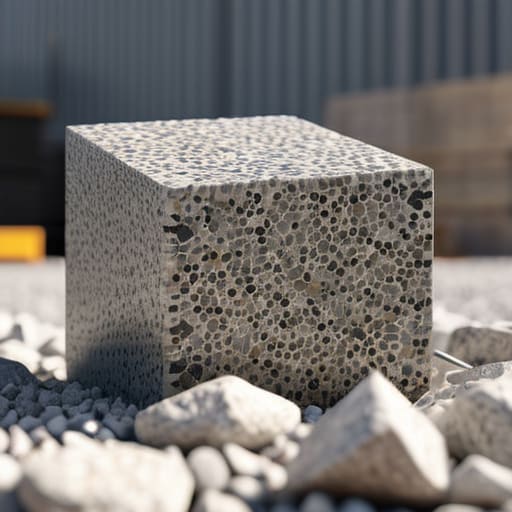
I’ve seen too many lads try to save a few quid by grabbing whatever’s lying around the yard, thinking “it’s all just stone, isn’t it?” Wrong. If you aren’t sticking to Type 1 MOT standards, you aren’t building a foundation; you’re building a future crack. The beauty of Type 1 is that the grading is precise—it’s a mix of different sizes that lock together when you run the roller over it. When you follow those specific subbase material specifications, you’re creating a solid, interlocking mass that won’t shift when the weight hits it.
The danger usually hides in the “cheap” alternatives. I’ve been called out to sites where they used recycled stuff that looked fine to the naked eye, but it was riddled with debris. You have to watch out for construction aggregate contamination limits; if there’s too much wood, plastic, or even just soft brick dust in that mix, it’s going to compress unevenly. Once that happens, your slab is going to follow the movement. You can pour the best concrete in the world, but if your hardcore is rubbish, the whole job is a write-off.
The Hidden Trap of Subbase Material Specifications
Here is where the real trouble starts. I’ve seen it a hundred times: a site manager looks at a pile of grey stone, sees it’s “crushed stuff,” and signs the delivery note. But “crushed stuff” isn’t a specification. The trap lies in the gap between what the paperwork says and what’s actually sitting in the back of the lorry. If you aren’t checking the hardcore material grading requirements yourself, you’re essentially gambling with the slab. You might think you’re getting a solid foundation, but if that material is poorly graded, it won’t interlock. It’ll just shift under the weight of the wet pour like a bag of marbles.
Then there’s the issue of what’s hiding in the mix. I’ve pulled shovels out of subbases that were supposed to be clean stone but turned out to be a mess of wood, plaster, and organic rot. These construction aggregate contamination limits aren’t just bureaucratic nonsense; they are the difference between a stable base and a sinkhole waiting to happen. If you accept “recycled” material without verifying the quality, you’re inviting organic matter to compress and rot six months down the line, right under your finished surface.
Five Things You’ll Regret Skipping When the Spec Hits the Ground
- Stop treating the spec like a suggestion; if your paperwork says Type 1 MOT but the driver turns up with a load of dirty, unwashed crushed concrete or “recycled” rubbish that hasn’t been screened, you reject it immediately. I’ve seen too many lads accept whatever is in the hopper just to keep the schedule moving, only to watch that slab sink two inches by Christmas.
- Demand a compaction requirement, not just a material type. It doesn’t matter if you’ve got the best stone in the country if you’re just spreading it out with a shovel and calling it a day. Your spec needs to state exactly how many passes a vibrating plate or roller needs to make to ensure that sub-base is actually a solid platform and not just a loose pile of gravel waiting to shift.
- Specify the depth in compacted layers, not just the total thickness. If you’re putting down 150mm of hardcore, you don’t just dump it all in and hope for the best. You spec it in two or three distinct lifts. If you try to compact a massive, deep layer all at once, you’ll only ever harden the top inch, leaving a soft, spongy mess underneath that’ll crack your concrete faster than a frost.
- Get the moisture content written down. I’ve seen plenty of “well-graded” hardcore that was bone dry and wouldn’t knit together, and plenty more that was a soup of mud that couldn’t be compacted for love or money. A proper spec should imply that the material is brought to that “sweet spot” of moisture—damp enough to bind, but not so wet it turns into a bog when the roller hits it.
- Don’t forget to account for the “fines.” If your spec is too loose and you’re getting nothing but large, chunky aggregate with no smaller particles to fill the gaps, you’re building a sieve, not a foundation. You need that well-graded mix where the smaller bits lock the big ones in place; otherwise, you’re just pouring expensive concrete over a bag of marbles.
Don't Build on a Lie
At the end of the day, you can order the most expensive, high-strength concrete mix in the country, but it won’t mean a damn thing if you’ve built it on top of rubbish. We’ve talked about why you can’t cut corners with your MOT Type 1, why you need to be wary of “close enough” sub-base specs, and why that layer of hardcore is the actual backbone of your entire build. If you don’t get the compaction right and you don’t ensure the material is consistent, you aren’t building a foundation; you’re just setting a timer on a disaster. Stop treating the sub-base like it’s invisible work—because once the slab is down, it’s the only thing keeping that ground from swallowing your hard work whole.
I’ve spent forty-three years watching people try to save a few quid on stone and handfuls of dirt, only to spend ten times that amount fixing the cracks and heaving slabs that follow. It’s easy to get caught up in the excitement of the pour, the smooth finish, and the final look, but a real professional knows that the real work happens in the muck and the grit before the first truck even arrives. Do it right the first time, specify the good stuff, and pack it down until it’s solid. Your future self—and anyone walking on that surface ten years from now—will thank you for it.
Frequently Asked Questions
If I’m working on a site with heavy clay, is standard Type 1 MOT actually going to cut it, or am I just setting myself up for a sinkhole?
Look, if you’ve got heavy clay, Type 1 is only half the battle. You can pour the best MOT in the world, but if that clay is swelling and shrinking like a sponge under your sub-base, your slab is going for a ride. You need a proper geotextile membrane to stop the fines from pumping up and fouling your stone, and you’d better ensure that clay is stabilized or excavated first. Don’t just layer stone on top of mud and hope for the best.
How do I know if the supplier is actually giving me clean, crushed stone or if they’re just dumping a load of dirty, unwashed recycled rubble on my sub-base?
You don’t look at the invoice; you look at the pile. If you see bits of red brick, chunks of old mortar, or anything that looks like it came out of a demolished house, send it back. Real Type 1 should be clean, angular, and consistent. If it looks like a graveyard of old buildings, it’s rubbish. It’ll compact fine for a week, then it’ll shift, and you’ll be the one explaining the cracks.
When we're talking about compaction, how do I know if the contractor has actually hit the right density or if they've just run the plate over it once to make it look flat?
Look, you can’t tell by looking at a flat surface; a quick pass with a plate compactor makes a liar look like a pro. If you want to know for sure, you ask for the compaction test results—the Proctor density, if they’re being proper. If they balk at that, they’re hiding something. Otherwise, grab a heavy sledgehammer and give the sub-base a real thwack. If it feels bouncy or hollow, they’ve just skimmed the surface.