I remember standing on a site in ’94, watching a lad try to set out a massive commercial slab using nothing but a spirit level and a bit of guesswork because the site manager was too tight to hire a surveyor. By the time the first truck arrived, I knew we were in trouble; you can’t just hope the ground is flat. People treat the math like it’s some abstract mystery, but the reality is much simpler and much more unforgiving. If you don’t understand exactly how levels and datums are established before that first shovel hits the dirt, you aren’t building a foundation—you’re just pouring a very expensive mistake into the mud.
I’m not here to give you a lecture from a textbook or some fancy engineering jargon that doesn’t work when it’s raining and the wind is howling. I’m going to tell you how we actually do it on a real site to ensure that what goes in the ground stays where it belongs. I’ll show you the difference between a theoretical line on a drawing and the hard reality of a fixed datum point, so you can stop worrying about cracks and start focusing on a pour that actually holds.
Table of Contents
Why Geodetic Control Networks Dictate Your Slabs Fate
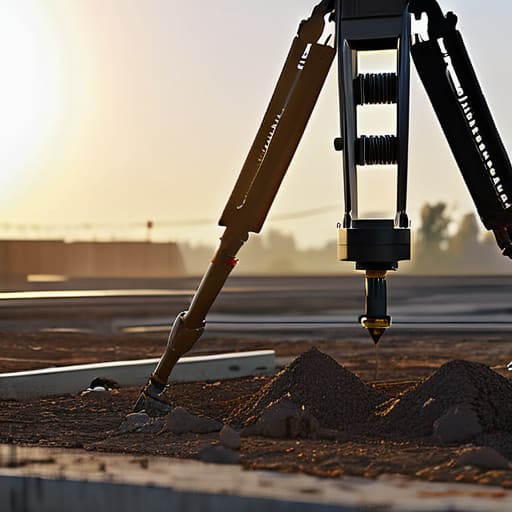
Now, don’t go thinking a level is just a bit of bubble in a tube or a laser spinning on a tripod. If you’re working on anything bigger than a garden path, you’re ultimately dancing to the tune of geodetic control networks. These networks are the invisible skeleton of the whole site, and if they’re shaky, your slab is a goner before you’ve even broken ground. I’ve seen lads rely on a single benchmark that was nothing more than a peg driven into soft clay, and when that moved a millimeter during a heavy rain, the whole site’s geometry went sideways.
The real headache usually comes down to the difference between what the satellite tells you and what the ground actually feels like. You can get all caught up in the technicalities of orthometric height vs ellipsoidal height, but for us on the ground, that math translates to whether your drainage actually flows or if you’ve just built yourself a very expensive puddle. If the surveyor hasn’t accounted for the geoid model accuracy properly, you might think you’re hitting your marks, but you’re actually pouring against a phantom elevation. You can’t fix a bad datum with a bigger mixer.
The Geoid Model Accuracy Trap That Ruins Your Site
Here’s where the lads in the office get it wrong and the boys on the ground pay for it. You’ll hear some surveyor talking a big game about GPS and satellite data, but if they aren’t accounting for the difference between orthometric height vs ellipsoidal height, you’re in for a world of hurt. A satellite doesn’t know where your local water table sits or how the gravity pulls on your specific patch of dirt. It gives you a mathematical figure on a perfect curve, but that’s not what your concrete needs to sit on.
If they rely on a shaky geoid model accuracy without checking it against a proper local benchmark, you’re basically building on a lie. I’ve seen sites where the “official” elevation was off by enough to turn a perfectly planned drainage run into a stagnant pond. You can’t just trust a digital readout; you need to know that the vertical datum definition they’re using actually matches the reality of the ground. If they haven’t bridged that gap between the math and the actual earth, you aren’t pouring a slab—you’re pouring a headache.
Five things I’ve learned about not wasting a single cubic metre
- Check your datum twice before the first truck pulls in. I’ve seen lads rely on a single offset point that gets knocked by a digger in the first hour of work; if your reference point moves, your whole slab is a hill, and you’re the one paying for the extra mix.
- Don’t trust a laser level if the ground is vibrating. If you’re working near heavy plant or a compaction rig, that beam is going to dance, and you’ll be chasing a level that doesn’t exist. Use a traditional optical level to double-check the electronic stuff.
- Establish your benchmarks on something that isn’t going to move. Don’t pin your levels to a fence post or a bit of timber; get them onto a permanent structure or a deep-driven pin that won’t shift when the sub-base gets compacted.
- Verify the height of the finished floor against the drainage. There’s no point having a perfectly level slab if your datum was set so low that your manholes are sitting above the concrete. Check the falls on the pipes before you even think about the slab levels.
- The sub-base is your real datum. If you’ve set your levels based on a rough dig, but the hardcore hasn’t been compacted to the right thickness, your finished level is a fantasy. Measure your depth from the bottom of the formation, not just the top of the stone.
Don't let the math get buried
At the end of the day, you can have a fleet of ready-mix trucks lined up and a crew of the best finishers in the county, but if your geodetic control is a mess, you’re just wasting everyone’s time. We’ve talked about why the geoid model matters and why those high-level networks are the backbone of the whole job. It’s easy to get caught up in the excitement of the pour itself, but the truth is that the battle is won or lost in the survey data long before the first shovel hits the dirt. If you ignore the precision of your datums or treat the geodetic control like a mere suggestion, you aren’t building a foundation; you’re just setting a trap for your future self to fall into when the cracks start appearing.
My advice? Stop rushing the setup. I’ve seen too many young lads try to shave twenty minutes off a job by eyeballing a datum or skipping the double-check on a benchmark, and I’ve seen the heartbreak that follows when the slab doesn’t sit where it’s supposed to. Respect the invisible math that governs the ground you stand on. If you get the levels right, the concrete will do exactly what it’s meant to do. Build it once, build it right, and build it on a foundation of certainty. There is a massive amount of pride to be found in a job where the levels are so perfect you don’t even have to think about them twice.
Frequently Asked Questions
If the surveyor's datum is spot on, why does my finished slab still end up looking like a biscuit tray?
Because a surveyor’s datum isn’t a magic wand; it’s just a starting point. You can have the most expensive GPS setup in the world, but if your gang is using a dodgy laser level or—heaven forbid—eyeballing the falls with a spirit level that’s seen better days, you’re cooked. It’s the translation from the paper to the ground where the mistakes happen. If your site datum is perfect but your physical transfer is sloppy, you’re just pouring a very expensive, uneven biscuit tray.
How much of a difference does it actually make if we use a laser level versus a traditional optical level on a site with heavy vibration?
If you’ve got heavy plant moving nearby, that laser level is going to lie to you. I’ve seen it happen a dozen times—the beam starts dancing because of the vibration, and suddenly your “perfect” datum is jumping all over the place. An optical level doesn’t care about a passing digger; it’s steady. If you’re relying on a jittery laser in those conditions, you aren’t setting levels, you’re just guessing with expensive equipment.
At what point do I stop trusting the paperwork and start checking the levels myself before the first truck arrives?
The moment you see the first truck pull onto the site, it’s already too late. If you’re waiting for the driver to knock to check your levels, you’ve already lost. You check them when the sub-base is compacted and the shuttering is pinned. Don’t trust a surveyor’s printout blindly; I’ve seen plenty of “perfect” paperwork lead to a slab that drains straight into the neighbor’s garden. Check it yourself, or pay for it later.