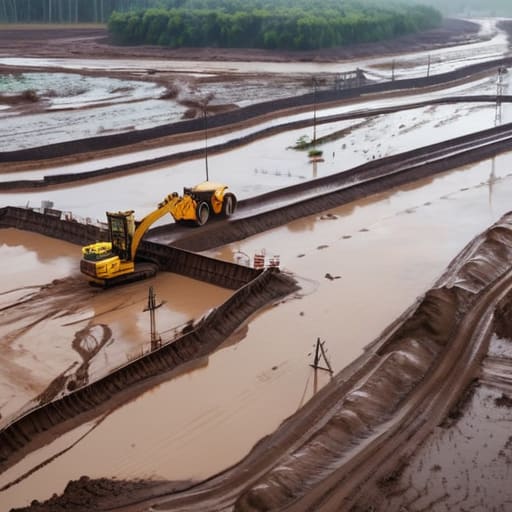
I remember a job back in the nineties, standing knee-deep in a slurry that looked more like chocolate milk than a foundation site, watching a young site manager try to explain why we were still pouring while the bottom of the excavation was weeping like a broken tap. He had all these fancy diagrams, but he didn’t understand the first thing about how dewatering works in real, messy soil. He thought a couple of cheap submersible pumps and a prayer would keep the sub-base dry, but all he was doing was inviting a disaster. If you don’t manage the water table properly, you aren’t building a structure; you’re just pouring money into a swamp.
I’m not here to give you a textbook lecture or some sanitized engineering theory that doesn’t hold up when the rain starts lashing down. I’m going to tell you how it actually works when the ground is fighting you every step of the way. We’ll talk about the difference between just moving water and actually stabilising your site, because if your sub-base is saturated, your concrete is already dead in the water. I’ll show you the practical side of keeping that ground dry, so you don’t end up like that lad in the nineties.
Table of Contents
Mastering Hydrogeology and Soil Permeability to Stop the Sink
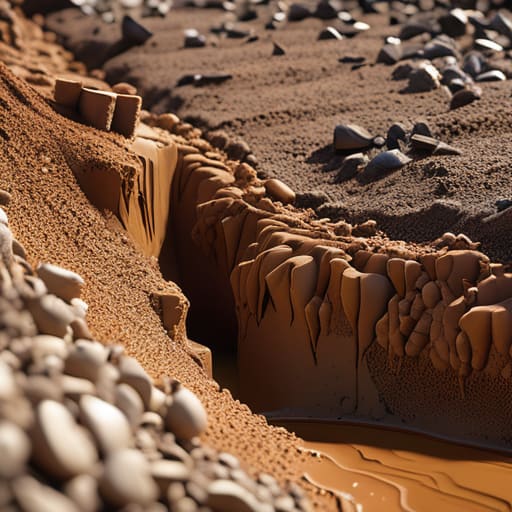
Now, listen. You can buy the fanciest pumps on the market, but if you don’t understand the ground you’re standing on, you’re just moving water from one hole to another while your foundation slowly turns into a soup. You have to respect hydrogeology and soil permeability before you even think about turning a machine on. If you’re working in tight, silty clay, your water isn’t going to move just because you’ve stuck a pipe in it. But if you hit a pocket of coarse sand or gravel, that water will move faster than a site foreman running from a mistake, and before you know it, your excavation is a swimming pool.
You can’t just guess. You need to know if you’re dealing with a slow seep or a pressurized flow. For the big jobs, we weren’t just bailing buckets; we were looking at subsurface water drawdown techniques to actually lower the water table in the surrounding area. If you don’t control the pressure in the soil itself, the ground will eventually give way, and no amount of concrete will save a slab that’s sitting on shifting sand.
Why Subsurface Water Drawdown Techniques Dictate Your Success
Listen, you can buy the highest grade of C35 mix in the country, but if you haven’t mastered your subsurface water drawdown techniques, you’re just throwing money into a wet hole. I’ve seen it a hundred times: a crew gets so focused on the delivery schedule that they ignore the fact that the water table is creeping up the sides of the excavation. If you don’t pull that water level down far enough below your formation level, you aren’t building a foundation—you’re building a boat.
The real success of a job is decided by how you manage the pressure of the water pushing against your sub-base. Whether you’re using wellpoints or more heavy-duty deep well dewatering systems, the goal is the same: you need a dry, stable platform that won’t shift or heave the moment the weight of the concrete hits it. If your drawdown isn’t consistent, that water will find its way into your aggregate, turning your carefully compacted base into a slurry of disappointment. You don’t manage the water once the pour starts; you manage it long before the first chute opens.
Five Things That’ll Save Your Slab (And Your Reputation)
- Stop treating water like an afterthought. If you wait until the trench is half-full to start thinking about pumps, you’ve already lost the battle. You need to have your dewatering system rigged, tested, and running well before the first mixer pulls up to the site.
- Watch your fines. It’s easy to pump out the water, but if you aren’t using the right filter cloth or well screens, you’ll end up sucking the actual soil out of the ground along with it. You’ll have a dry hole, sure, but you’ll also have a hollowed-out sub-base that’ll sink the moment you put any weight on it.
- Don’t just pump and pray. You need to monitor the drawdown levels constantly. If the water table starts creeping back up while you’re trying to prep your blinding, you’re just wasting time and money. A dewatering system isn’t “set and forget”—it’s a constant battle.
- Check your discharge point. I’ve seen lads pump clean water straight into a neighbor’s garden or a local stream without a second thought, only to end up with a legal headache and a site shut down. Control where that water goes, or you’ll be spending more time talking to inspectors than pouring concrete.
- Respect the soil you’re working in. You can’t use a sand-dewatering setup in heavy clay and expect a miracle. If you don’t match your pumping method to the actual permeability of the ground, you’re just spinning your wheels and making expensive mud.
Don't Let the Water Win
At the end of the day, dewatering isn’t some fancy science experiment you can just leave to the theorists; it’s the difference between a solid foundation and a money pit. We’ve talked about soil permeability, the drawdown, and why you can’t just ignore the hydrogeology of your site. If you ignore the water, the water will eventually ignore your concrete. You can buy the highest grade mix in the country, but if you’re pouring into a soup of unsettled silt because your dewatering plan was an afterthought, you aren’t building anything—you’re just burying your profit in the mud. Get the water out, stabilize the ground, and respect the physics of the site before the first truck even pulls up to the gate.
I’ve seen too many lads try to rush the job, thinking they can outrun a rising water table with a bit of luck and a faster pump. Luck isn’t a construction material, and it won’t stop a slab from cracking when the subgrade shifts under pressure. Take the time to do the groundwork right, even when it feels like you’re just moving water from one hole to another for no reason. When you finally get that pour finished and the surface is level and dry, you’ll know it’s going to stay that way. Build it on solid ground, and you won’t be the one getting the phone call in five years when the cracks start appearing.
Frequently Asked Questions
How do I know if my sub-base is actually dry enough to pour, or if I'm just looking at a surface layer that's fooling me?
Don’t just trust your eyes; the surface is a liar. You can have a dry crust on top while you’ve got a soup of silt two inches down. Grab a probe or a heavy-duty screwdriver and drive it into the base. If it hits resistance, you’re alright. If it slides in like it’s hitting butter, stop everything. You aren’t pouring on a sub-base; you’re pouring on a sponge, and that slab will crack before the week is out.
At what point does pumping water out of a site start causing more problems, like settling the ground around the edges of my excavation?
You’ve hit the nail on the head. You start seeing trouble the moment you pull water from the soil faster than the ground can settle into its new reality. If you pump too hard or too long, you aren’t just removing water; you’re sucking the fines out from under the neighboring foundations. Once those particles migrate into your well or sump, the ground around your edge loses its structure. That’s when you stop building a foundation and start building a sinkhole.
If I’m dealing with heavy rain right as the trucks turn up, is there any way to save the pour, or should I just send the lads home?
If the rain is just a drizzle and you’ve got the forms tight, you might scrape through, but if it’s coming down in buckets, send the lads home. Don’t let some site manager talk you into a “wet pour” just to keep the schedule. Once that rain hits your fresh mix, it ruins your water-to-cement ratio and leaves you with a surface like sand. If the ground is turning to soup, the pour is already dead.